
Review · INDIA
Full-Day Goa Shore Excursion Including Lunch at Spice Plantation
Goa’s real character appears away from its beaches, in lamp-lit temples, Portuguese-era churches, spice gardens, and the old streets of Fontainhas. This private shore excursion links those sights in one full day, with lunch at a plantation and a guide focused on your group.
I like the private vehicle and guide, which let you move at your own pace and avoid a large sightseeing group. I also like the mix of Hindu and Catholic landmarks, especially the chance to compare living temples with Old Goa’s grand colonial churches.
The main caution is time. Seven stops in 8 to 9 hours means a full schedule, and traffic can affect how long you get at each place. The non-refundable booking policy also calls for care if your cruise schedule is uncertain.
Key points at a glance
- A true cross-section of Goa: Visit two Hindu temples, three major Catholic sites, a spice plantation, and the old Latin quarter of Panjim.
- Private touring: Only your group takes part, with round-trip transport in an air-conditioned vehicle.
- A traditional plantation lunch: The included buffet is served at Tropical Spice Plantation, where the welcome includes Aarti, Kumkum, and a flower garland.
- Strong guide service: Guides named in the tour feedback include Jenny, Anand, and Deepak, with praise for their care and personal attention.
- Useful for cruise passengers: Pickup and drop-off at Goa Cruise Port are included, but you must provide ship and docking details when booking.
- Temple clothing matters: Cover your shoulders, chest, navel, and upper arms, wear clothing below the knee, and remove your shoes before entering.
Why this full day gives you a better look at Goa
This excursion works because it does not treat Goa as only a beach stop. In one day, you see religious life, Portuguese influence, local food, spice growing, and a residential quarter where old Indo-Portuguese homes still shape the streets.
The private format makes the packed schedule easier to manage. You are not waiting for a large group at every doorway, and you can ask your guide to explain a detail that catches your eye. Guides such as Jenny and Anand have been praised for clear explanations and personal service, while Jenny and driver-guide Deepak were noted for helping sort out a booking-date mistake.
At $162.17 per person, this is not a budget shore outing. The price makes more sense for a small group that values private transport, port transfers, a full-time guide, and lunch. If several people share the vehicle, the cost can compare well with arranging separate transport and admission planning on your own.
The value is strongest for a cruise passenger. You get a planned route, a driver familiar with the area, and a return to the port included. You also avoid spending your short time ashore figuring out how to connect temples, the plantation, Old Goa, and Panjim.
More Shore Excursions with Lunch in India:
- Top Choice For Cruisers: Ephesus, Mary’s House WITH TICKETS+LUNCH
★ 5.0 · 7,233 reviews - D-Day Beaches Shore Excursion from Le Havre with Packed Lunch
★ 5.0 · 486 reviews - ALL INCLUSIVE VIP Shore Excursion Customizable Ephesus with Lunch
★ 5.0 · 361 reviews
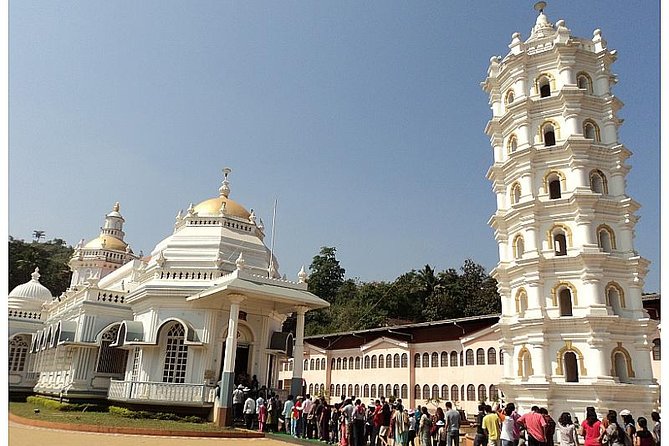
Shri Manguesh Temple and its seven-story lamp tower
Your morning begins around 9:00 am with pickup at Goa Cruise Port or your hotel. From there, you ride in an air-conditioned vehicle to Shri Manguesh Temple, a 400-year-old site dedicated to Lord Shiva.
The temple sits on a hillock and is known for its elegant structure and tall Deepa Stambha, a seven-story decorative lamp tower near the entrance. The tower is one of the first details to catch your eye, and it gives the complex a strong vertical focus.
This is a place of worship, not simply a monument. You need to dress with care: shoulders, chest, navel, and upper arms must be covered, and lower clothing should reach below the knee. Shoes come off outside the temple, though socks may remain on your feet.
You have about an hour here. That is enough for a guided look and time to notice the temple’s pillars and decorative features, but it is not an open-ended visit. Listen to the explanation of the temple’s role and allow the setting to be more than a quick photo stop.
Shantadurga Temple among Goa’s green hills
The next stop is Shree Shantadurga Temple, set among lush hills and dedicated to Shree Shantadurga Devi. The temple’s central figure represents the goddess Durga, who is said to have mediated between Lord Vishnu and Lord Shiva.
Like Shri Manguesh, this is an active sacred place. The same clothing rules and shoe removal apply, so it is practical to dress for both temples before leaving your hotel or ship. A light layer that covers the shoulders and knees can save you from having to adjust your clothing at the entrance.
You get about an hour here. The two temple visits work well together because they show different aspects of Goa’s Hindu tradition, while the guide can explain the stories and customs that are easy to miss if you visit independently.
Do not expect a long, quiet retreat at either temple. The day has several major stops ahead, and the exact length of each visit can shift with road conditions and the pace of your group.
Tropical Spice Plantation lunch and garden time
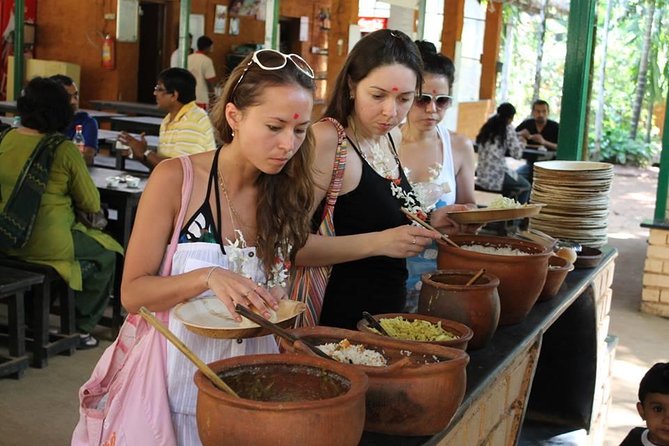
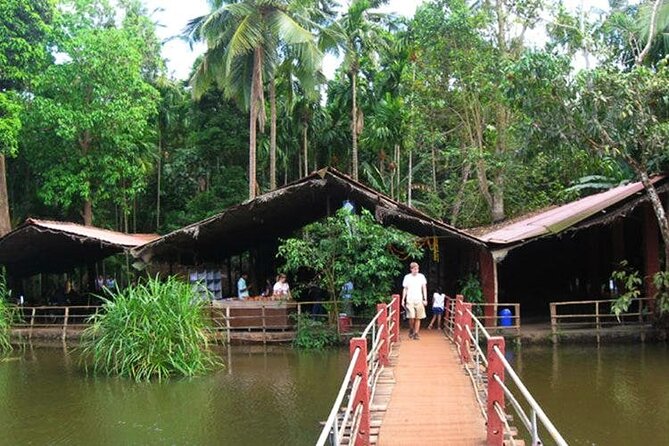
Lunch at Tropical Spice Plantation is the day’s main pause. You receive a traditional welcome with Aarti, Kumkum, and a garland of flowers before sitting down to a buffet meal.
The included food is the practical heart of the tour. You do not need to search for a restaurant between the temples and Old Goa, and the two-hour stop gives you time to eat rather than rushing through a short roadside break. Coffee, tea, and other drinks are not included, so plan to pay separately if you want them.
After lunch, you can walk around the grounds. The plantation includes a butterfly garden, and the property is known for around 75 bird species. You might not see every species during a short visit, but the garden gives you a pleasant change from the vehicle and church interiors.
This stop also adds local context. Goa’s spice trade helped connect the region with wider commercial networks, and a plantation visit gives you something tangible to smell, taste, and see. I find that useful because it turns an abstract history lesson into a place with plants, food, and working grounds.
The plantation takes two hours, making it the longest scheduled stop. That helps break up the day, though anyone focused mainly on churches may feel that the lunch and garden visit uses a large share of sightseeing time.
More full days ashore around India:
- Mumbai Shore Excursion For Cruise Ships – Full day City Tour
★ 5.0 · 17 reviews - Full-Day Private South Goa Sightseeing Tour with Port Pickup
★ 4.0 · 2 reviews - From the Port of Kos: Full Day Boat Cruise to 3 Islands
★ 4.8 · 5,137 reviews - From Civitavecchia: Full-Day Panoramic Bus Tour of Rome
★ 4.0 · 1,260 reviews
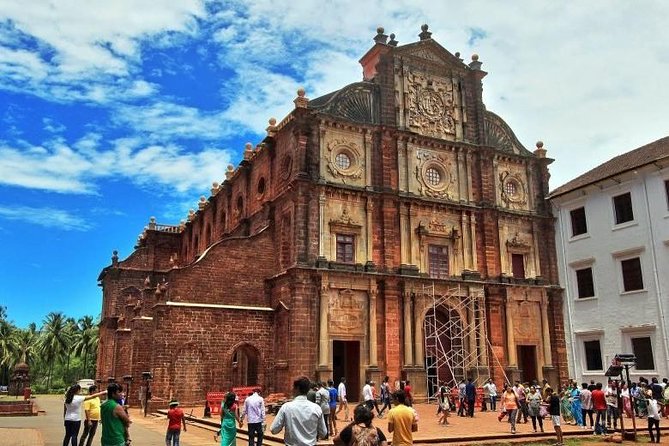
Basilica of Bom Jesus in Old Goa
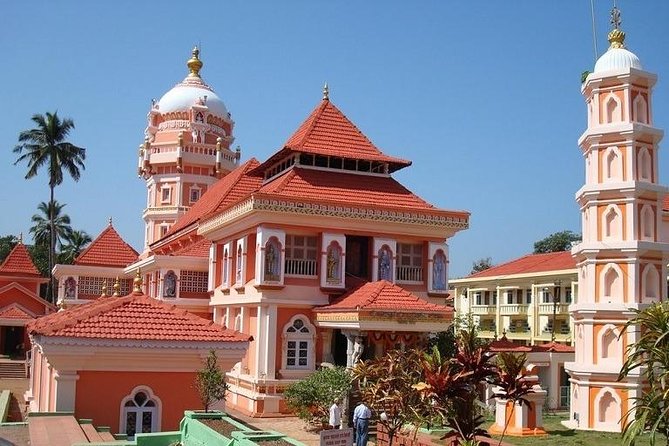
After lunch, the tour moves to Old Goa and the Basilica of Bom Jesus. Completed in 1605, this UNESCO World Heritage-listed church contains the tomb of Saint Francis Xavier, the missionary associated with the spread of Christianity in the region.
The basilica is one of Goa’s best-known religious sites, but its importance is not limited to its age or fame. It shows how firmly Portuguese Catholic influence took root in Goa and remains a place of devotion as well as a historic building.
You have about an hour here. Use it to look beyond the main altar and notice the scale, materials, and religious art. Your guide can help connect the building to Goa’s wider past, which is especially useful if you are not familiar with the region’s Catholic traditions.
Because this is a major attraction, the visit may feel more formal and scheduled than the temples. Still, it is an essential stop for first-time visitors who want to understand why Old Goa is so important.
Se Cathedral and the scale of Catholic Goa
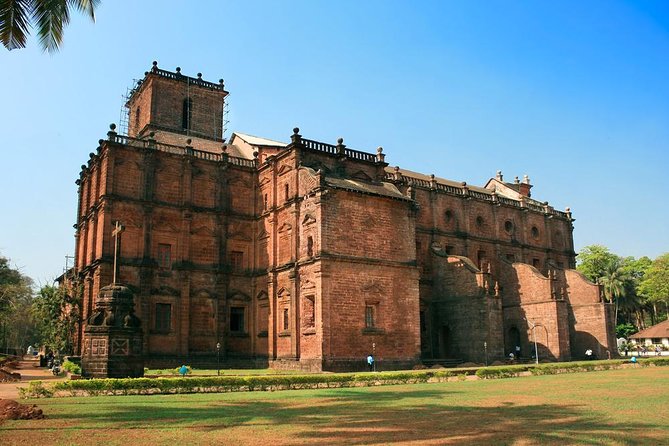
Next comes Se Cathedral, dedicated to Saint Catherine of Alexandria. It is a 16th-century monument and the largest church in Goa.
The building gives you a sense of the scale of Portuguese-era religious construction. After the more intimate experience of the temples, Se Cathedral feels grand and institutional. That contrast is one of the strengths of the route.
Again, the planned stop is about an hour. You have enough time for a careful look, though the three church visits in succession can begin to feel similar if you are mainly interested in architecture. Ask your guide to point out what separates Se Cathedral from Bom Jesus and the Church of St. Francis of Assisi.
The schedule is better suited to a first overview than to a specialist church study. You see the principal sites, learn their place in Goa’s story, and leave with a clear sense of how much remains for a longer visit.
Church of St. Francis of Assisi and its museum
The Church of St. Francis of Assisi dates from the 17th century. Attached to it is a former convent that was converted into a museum by the Archaeological Survey of India in 1964.
This stop adds a museum element to the Old Goa section. You are not only moving from church to church, you are also seeing how religious buildings and collections are preserved and interpreted.
The church visit is scheduled for about an hour. Admission is not included here, unlike the other listed sightseeing stops, so bring some money for the entrance if required. The supplied tour details do not give the exact fee.
I would pay attention to the change in mood. Bom Jesus is closely linked with Saint Francis Xavier, Se Cathedral emphasizes monumental scale, and St. Francis of Assisi adds the former convent and museum. Together, the three sites make more sense than any one church visited alone.
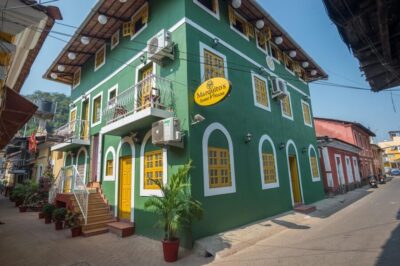
Fontainhas, Panjim’s old Portuguese quarter
The final sightseeing stop is Fontainhas, a heritage neighborhood in Panjim, Goa’s current capital. The area is known for Indo-Portuguese architecture and grew when the capital moved.
A one-hour heritage walk gives you a chance to slow down after the large churches. Instead of another grand interior, you see streets and homes shaped by a blend of Indian and Portuguese design.
This is one of the most useful parts of the day for understanding modern Goa. The temples show living Hindu practice, Old Goa shows the power of Portuguese Catholic culture, and Fontainhas brings those influences into an urban neighborhood.
The walk may be less structured than the church visits, so your guide’s local knowledge matters. Ask about the architecture and the neighborhood’s place in Panjim. The hour is brief, but it offers a welcome change before the return drive.
Transport, timing, and what the private format means
The experience lasts about 8 to 9 hours, with pickup at 9:00 am and drop-off at the cruise port, hotel, or another desired location in Goa. Transfer times are approximate because traffic affects the route.
The air-conditioned vehicle matters in Goa’s heat, especially on a day with several stops. Bottled water is included, and the private setup means only your group participates.
Cruise passengers must provide the ship name, docking time, disembarkation time, and re-boarding time when booking. This is not a minor formality. The tour ends with a return to the port, but the operator cannot refund a missed tour caused by a late or non-arriving ship.
The excursion is listed as suitable for most people, but the day includes walking through temple and church complexes plus a one-hour heritage walk. If you need a slower pace, discuss it with your guide at the start. The private format gives you more room to manage the day than a large group tour, though the route still has many scheduled stops.
What to wear and carry for the temples
Temple clothing is the most important practical detail. Wear or bring clothing that covers:
- Your shoulders and upper arms
- Your chest and navel
- Your legs below the knee
You must remove footwear outside the temples, while socks are allowed. Comfortable shoes are useful for the rest of the day, but make sure they are easy to take off and put back on.
Bottled water is provided. Drinks with lunch are not included, so budget separately for coffee, tea, or other beverages. The plantation buffet is included, as are the private vehicle and English-speaking guide.
Who should book this Goa excursion?
I would choose this tour if you want a broad first look at Goa and prefer someone else to handle the driving and route. It suits cruise passengers especially well because the port pickup and return are built into the day.
It is also a good fit for small groups interested in both faiths represented in Goa. You see active Hindu temples, major Catholic churches, a church museum, a spice plantation, and a historic city neighborhood in one outing.
You may want a different plan if you prefer a slow beach day, a single detailed heritage site, or a flexible schedule with long meals. This route is full and organized, and traffic can reduce the time available at individual stops.
The private format is the strongest reason to pay the higher price. Guides such as Jenny, Anand, and Deepak have been singled out for attentive service, clear communication, and help with special requests such as buying Indian spices. That personal care can make a tightly packed shore day feel far easier.
Should you book it?
Book this tour if you want Goa’s temples, churches, food traditions, and old neighborhoods in one carefully arranged day. The included lunch, private transport, English-speaking guide, and port return give the $162.17 price real value for a small group.
Think twice if your ship schedule is uncertain, since the booking is non-refundable and a late arrival does not qualify for a refund. Also prepare for a busy day and follow the temple dress rules. For first-time visitors who want more than beaches, this is a strong, practical choice.
FAQ
How long does the Goa shore excursion last?
The experience lasts approximately 8 to 9 hours, including sightseeing, lunch, and transfers.
What time does the tour start?
The stated start time is 9:00 am, with morning pickup from Goa Cruise Port or a hotel.
Is transportation included?
Yes. Round-trip pickup and drop-off are included, along with transport in a private air-conditioned vehicle.
Is lunch included?
Yes. A buffet lunch at Tropical Spice Plantation is included. Coffee, tea, and other drinks are not included.
What should I wear to the Hindu temples?
Your clothing must cover your shoulders, chest, navel, and upper arms, and your lower clothing must reach below the knee. You must remove your shoes before entering, though socks are permitted.
Do cruise passengers need to provide ship details?
Yes. At booking, cruise passengers must provide the ship name, docking time, disembarkation time, and re-boarding time.
Is the tour private?
Yes. Only your group participates, with a professional private English-speaking guide.
Fresh shore excursions around India
- Goa Shore Excursion with Spice Plantation & Old Goa★ 3.5 · 4 reviews
- Full-Day Private South Goa Sightseeing Tour with Port Pickup★ 4.0 · 2 reviews
- Taj Mahal and Agra Private Tour with free Airport pickup★ 4.5 · 6 reviews
- Mumbai: Shore Excursion Group City Tour★ 5.0 · 2 reviews
- Mumbai Shore Excursions: Small Group Mumbai Sightseeing tour★ 4.8 · 6 reviews
- Mumbai: Group Shore Excursion for Cruise Passengers★ 4.3 · 4 reviews
- Mumbai: Dharavi Slum Tour with Home Visit Shore Excursion★ 5.0 · 2 reviews
- Kochi: Tuk-Tuk Tour with Pickup from Cruise Ships★ 4.2 · 3 reviews
India Shore Excursions, compared.

Kochi Sightseeing Tuk-Tuk Tour with Pickup From Cruise Ships
Read our review →
Kochi Tuk-Tuk Private Tours with Pickup from Cruise Ships
Read our review →
Tuk Tuk Kochi Tours with pickup from Cruise Ship
Read our review →
Exclusive Kochi Tuk Tuk Tour Including Pickup from Cruise Ships
Read our review →
All inclusive Mumbai Shore Excursion from Mumbai port
Read our review →
Goa Shore excursions : All inclusive Small Group tour
Read our review →Browse the lists this tour appears in