
Review · LE HAVRE
D-Day Beaches Shore Excursion from Le Havre with Packed Lunch
Normandy’s D-Day sites are not a quick photo stop. They are scattered across the coast, and this full-day trip from Le Havre gives you time at the cliffs, beaches, bunkers, and cemeteries that shaped June 6, 1944. The most moving part is the mix of American and German sites, which gives you more than one side of the story.
I like two things in particular: the homemade baguette lunch saves valuable sightseeing time, and the guides bring maps, wartime photographs, and stories about real soldiers to each stop. The main drawback is the long day, with roughly two hours on the road each way and quite a bit of walking at the sites.
Key points to know before booking
- Pointe du Hoc gives you the most dramatic setting: Walk among bomb craters and ruined German positions above the sea.
- Both cemeteries are included: La Cambe offers a German perspective, while the American Cemetery at Colleville-sur-Mer is a powerful place for quiet reflection.
- You eat lunch at Omaha Beach: The packed meal includes a large baguette sandwich, chips, water, and a small dessert.
- The guide makes the difference: Bertrand, Ash, Sam, and Thelma are among the guides named in guest feedback, with Bertrand often using a tablet for maps, photographs, and personal accounts.
- The schedule is built for cruise passengers: Pickup and return are at the Le Havre cruise terminal, with the goal of getting you back before departure.
- Expect a large group option: The maximum is 45 people, though a private-tour choice may be available when booking.
Why this Normandy trip is worth a full day
The D-Day coast is too spread out for a casual visit from Le Havre. You need time on the road to reach Normandy, but that drive also gives your guide a chance to explain the campaign before you arrive. I like this approach because the beaches mean more when you understand the military problem facing the Allied forces.
The tour begins at the Le Havre cruise terminal on Quai Roger Meunier, though hotel pickup in Le Havre is also offered. From there, you head toward the Normandy coast while the guide sets the scene: Le Havre was an important logistical point during the war, and the surrounding region became central to the Allied effort to liberate Europe.
The full experience lasts about 10 hours. That sounds long, and it is. Still, the timing makes sense for a cruise shore trip. The major sites are far from the port, and rushing through them would weaken the whole experience. You should think of this as a serious history day, not a quick excursion with a few scenic stops.
More Beach Shore Excursions in France:
- Private tour landing beaches from Le Havre cruise terminal
★ 5.0 · 22 reviews - From Cherbourg: D-Day Beaches Shore Excursion
★ 4.6 · 12 reviews - Hilo Shore Excursion: Volcanoes National Park & Black Sand Beach
★ 4.5 · 2,338 reviews
La Cambe German Cemetery gives the day a wider view
Your first major stop is La Cambe German War Cemetery. It is quieter and more restrained than the American Cemetery, with dark stone markers arranged among carefully maintained grounds.
This stop matters because it reminds you that Normandy was not a simple story of heroes on one side and faceless enemies on the other. German soldiers also died here, many caught in a war directed by a criminal regime but fought by individual men with families and personal lives.
A guide such as Ash may use this site to explain the conflict from a broader human point of view. That balance is one of the strongest features of the day. It does not reduce the Allied cause or the horror of Nazi occupation, but it helps you consider the scale of the loss on every side.
You have about an hour here. That is enough time to walk through the cemetery, listen to the guide, and take in the quiet. Bring comfortable shoes. The stop is not difficult in the way Pointe du Hoc can be, but the day includes repeated walking, standing, and moving between the vehicle and open sites.
Pointe du Hoc brings the battle into focus
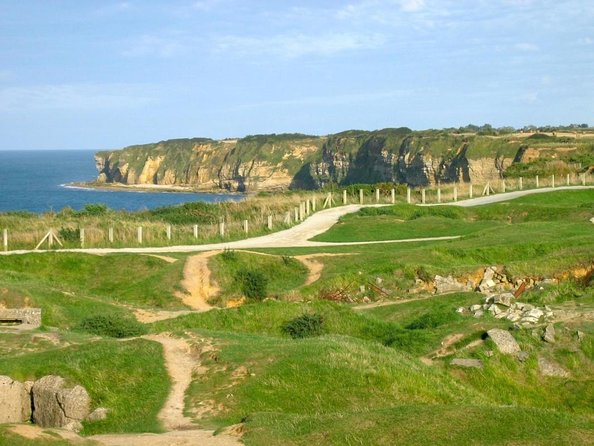
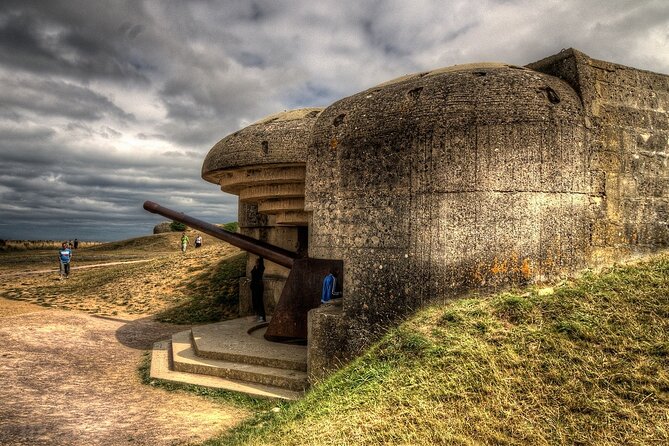
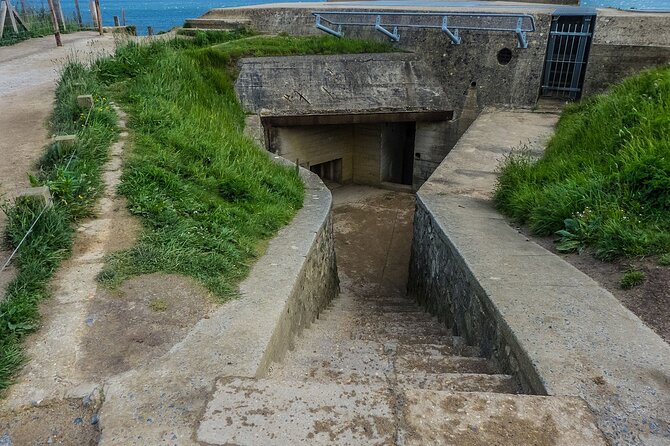
At Pointe du Hoc, history becomes physical. The headland rises above the coast, and the ground is still marked by large bomb craters. Ruined German bunkers and gun positions remain among the grass.
On June 6, 1944, American Army Rangers climbed the roughly 100-foot cliffs under fire to silence German artillery positions. Those guns threatened the landing areas at Utah and Omaha Beach, so taking the position was a key task in the invasion.
You get about an hour here, enough to walk among the craters and fortifications. The uneven ground is part of the experience, but it also makes this one of the more physically demanding stops. Wear sturdy shoes and be ready for wind, rain, or cold weather, especially outside summer.
This is where a strong guide can turn ruins into a clear story. Bertrand has been praised for using a tablet with wartime photographs, maps, and accounts from soldiers and their families. That kind of visual aid helps you connect the broken concrete under your feet with the men who fought here.
The site is also a useful reminder that D-Day was not just a beach assault. It was a network of missions involving cliffs, artillery, bridges, roads, ships, aircraft, and thousands of decisions made under fire.
Omaha Beach is the emotional center of the day
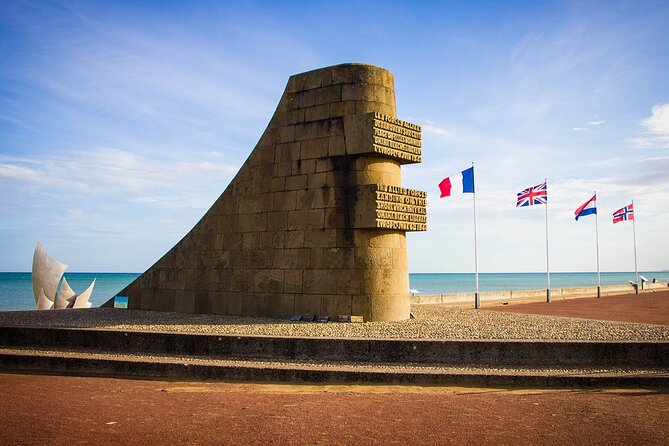
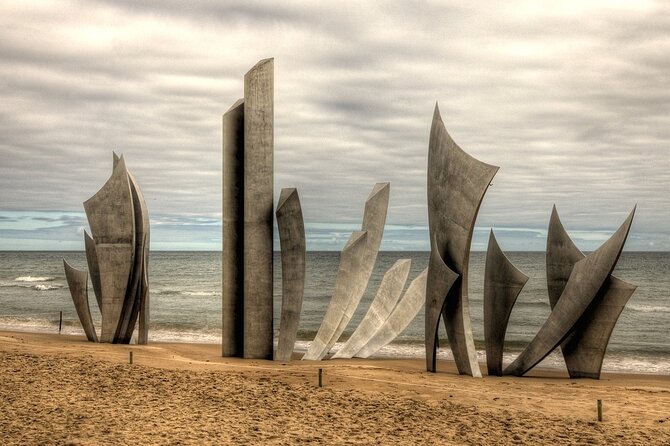
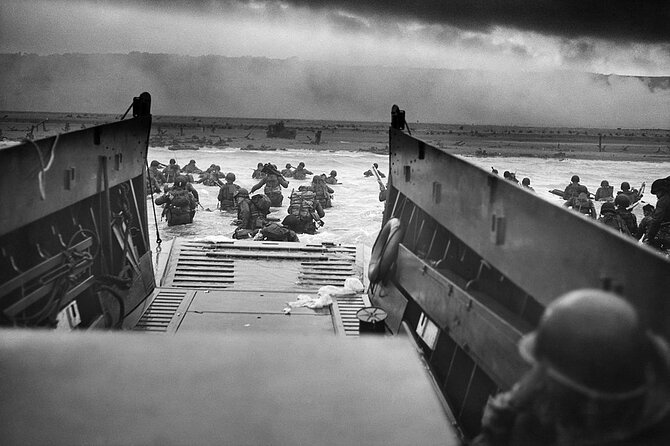
Omaha Beach is the stop most likely to affect you personally. The wide shore looks peaceful now, which makes it difficult to picture the gunfire, confusion, and casualties of June 6, 1944.
You have around two hours here, including time for lunch. That longer pause is welcome. You can walk on the sand, look back toward the bluffs, and listen to the guide explain how the beach and exits shaped the battle.
The name Bloody Omaha is not an exaggeration. This was one of the hardest-fought landing areas, and the Allied forces faced strong German defenses from exposed positions. The physical distance between the water and the higher ground helps you understand how difficult it was to move inland.
I especially like that the schedule lets you walk on the beach rather than only view it from a bus. Some cruise excursions pass Omaha Beach without stopping, or pause only for a distant photograph. Here, you have time to pay your respects and consider the ground itself.
The guide may also share personal accounts and stories about individual soldiers. Bertrand, Sam, Ash, and Thelma have all been singled out for clear storytelling and strong command of the subject. The best moments are often not a list of troop movements, but a short account of what one person saw, feared, or survived.
More Shore Excursions with Lunch in France:
- Top Choice For Cruisers: Ephesus, Mary’s House WITH TICKETS+LUNCH
★ 5.0 · 7,233 reviews - ALL INCLUSIVE VIP Shore Excursion Customizable Ephesus with Lunch
★ 5.0 · 361 reviews - ALL INCLUSIVE Private Ephesus, Terrace Houses tour with LUNCH
★ 5.0 · 203 reviews - Kusadasi Shore Excursion: Ephesus Sightseeing Tour with Lunch
★ 4.5 · 145 reviews
The baguette lunch keeps the schedule moving
At Omaha Beach, the staff distributes the included lunch. The meal is described as a homemade baguette sandwich with ham and cheese, along with chips, water, and a small dessert. Some meals have included macarons or other small French pastries.
This is not a restaurant lunch, and you should not expect a long indoor break. You eat outdoors, generally as part of the beach stop. That may sound basic, but it is a smart choice for a port day. Sitting down for a full meal could easily cost an hour or more, time that is better spent at the historic sites.
The large baguette is practical rather than fancy. It gives you a substantial meal during a long day, and the French bread fits the setting nicely. You should bring any extra snacks or drinks you may want because other food and beverages are not included.
The lunch also works well for family groups and anyone who wants to keep the day focused. If you prefer a slower meal with table service, this format may feel plain. If you would rather see more of Normandy than spend time in a restaurant, it is a good trade.
The American Cemetery puts the scale of sacrifice into view
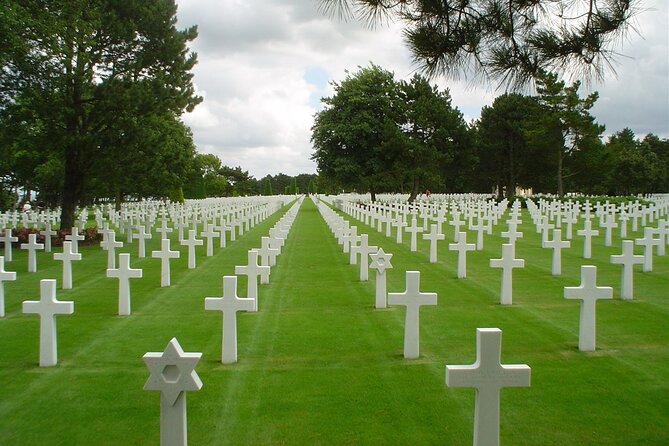
The American Cemetery at Colleville-sur-Mer is one of the most carefully maintained and emotionally powerful places in Normandy. More than 9,000 American service members are buried here, in rows of white crosses and Stars of David above the coast.
You have about two hours, which is generous compared with many rushed shore excursions. Use that time slowly. Walk among the graves, visit the Memorial Chapel, and look toward the sea. The site is not only a military cemetery. It is also a place where the human cost of the invasion becomes impossible to ignore.
The contrast with La Cambe makes both sites more meaningful. At La Cambe, the darker markers and quieter setting encourage a different kind of thought. At Colleville-sur-Mer, the scale and order of the cemetery bring home the number of young lives lost in the campaign.
This is also the stop where personal connections can surface. If someone in your family served in Normandy, you may find the experience especially intense. Even without that connection, the setting asks for a slower pace than a typical sightseeing stop.
Follow the guide’s timing carefully. You will have room to explore, but this is still a shore excursion with a fixed return to Le Havre. The guide may gather the group at set times to keep the return drive on schedule.
The ride from Le Havre is part of the lesson
The driving time is the most obvious cost of visiting Normandy from Le Havre. The journey takes roughly two hours each way, depending on traffic and the day’s exact timing.
That may sound like a disadvantage, but a good guide uses the road well. Bertrand has been praised for narrating much of the drive, and Sam, Ash, and Thelma are also noted for explaining the events and people leading up to the invasion. Instead of losing four hours, you get a moving classroom before and after the site visits.
The countryside between Le Havre and Normandy can also be pleasant to watch, but do not book this trip for scenery alone. The value comes from reaching the D-Day locations with a guide who can explain what happened there.
The vehicle group can include up to 45 people. A larger group may mean less individual attention and a slower boarding process, though the guides are described as organized and clear about meeting times. If you want a more personal arrangement, check whether the private-tour option fits your budget.
Price, timing, and the value of the shore-excursion format
The advertised price is about $119.72 per person. For a 10-hour trip with port pickup and return, a guide, transportation, several major D-Day sites, and lunch, that is a competitive price.
The strongest value comes from the number of meaningful stops. You visit both cemeteries, Pointe du Hoc, and Omaha Beach rather than choosing only one area. You also avoid arranging separate transport across a wide stretch of Normandy.
A private cruise excursion with a similar focus can cost far more. One guest specifically compared this experience with a cruise-operated option priced around $329 per person, noting that the more expensive trip offered a restaurant meal but less time at Omaha Beach. That comparison captures the choice well: here, you trade table service for more sightseeing and a lower price.
The tour is offered in English, and confirmation normally arrives when you book. If you book within nine days of departure, confirmation can take up to 48 hours and depends on availability. Free cancellation is available up to 24 hours before the start time. The operator can also cancel if the minimum number of participants is not reached, in which case you are offered another option or a full refund.
What to wear and how much walking to expect
The tour requires moderate physical fitness. You should be able to walk through cemeteries, across open ground, along the beach, and around uneven areas at Pointe du Hoc.
Dress for exposure. One guest specifically advised wearing warm clothing in autumn, and that is sensible advice for any season with cool or wet weather. The coastal sites can feel windy, and you may spend time outside while listening to the guide.
Comfortable walking shoes matter more than stylish ones. You will not be hiking all day, but the bomb craters, bunkers, cemetery paths, and beach can add up. Keep your camera, water, and any personal medicine easy to reach.
Service animals are allowed. The activity is offered in English, and the guide may use visual material such as maps, photographs, and a tablet to support the explanation.
Who should book this D-Day excursion?
I would choose this tour if you have one day in Le Havre and want a serious introduction to Normandy’s invasion sites. It suits people who care about military history, family members researching wartime connections, and anyone willing to trade a leisurely lunch for more time at the beaches and cemeteries.
It also works well for first-time visitors. You see the main places that give shape to the D-Day story, and the guide fills in the links between them. The German cemetery is an especially useful addition because it prevents the day from becoming a narrow tour of only American memorials.
You may want a different option if you dislike long road journeys, outdoor lunches, or fixed group schedules. A 10-hour day can be tiring, and the subject matter is heavy. This is not a light sightseeing outing.
Should you book it?
Book this tour if your priority is seeing the key Normandy sites in one port day, with enough time to walk at Omaha Beach and visit both major cemeteries. The baguette lunch is simple but efficient, and the price is strong for the amount of ground covered.
I would be most comfortable booking it for a cruise with a clear day in port, since pickup and return are designed around the ship schedule. Pay close attention to the cancellation terms, check the private option if you want more space, and prepare for a long, emotional day.
If you want a quick photo stop, skip it. If you want the cliffs, beaches, bunkers, graves, and human stories connected in one carefully timed trip, this is a solid choice.
FAQ
How long is the D-Day shore excursion from Le Havre?
The experience lasts about 10 hours, including the drive between Le Havre and the Normandy sites.
Where does the tour begin and end?
It begins at the Le Havre cruise terminal on Quai Roger Meunier. Hotel pickup in Le Havre may also be available, and the tour ends back at the meeting point.
Which D-Day sites are included?
The route includes La Cambe German War Cemetery, Pointe du Hoc, Omaha Beach, and the Normandy American Cemetery at Colleville-sur-Mer.
What does the included lunch contain?
Lunch includes a homemade baguette sandwich, water, chips, and a small dessert. Other food and drinks are not included.
Is this tour suitable for people with limited mobility?
The activity calls for a moderate physical fitness level. You should expect walking at cemeteries, the beach, and the uneven ground around Pointe du Hoc.
Can I cancel the tour for a refund?
You can cancel up to 24 hours before the experience begins for a full refund. Cancellations or changes made less than 24 hours before the start time are not accepted for a refund.
Fresh shore excursions around France
- Le Havre Shore Excursion: Private Tour of Giverny, Rouen and Honfleur★ 5.0 · 19 reviews
- Shore Excursion Private Tour from Cannes★ 4.0 · 2 reviews
- Shore excursion to Eze, Monaco and Monte Carlo from Cannes★ 4.5 · 27 reviews
- Full-Day Private Custom-Made Cannes Shore Excursion★ 5.0 · 18 reviews
- From the port of Cannes Private shore excursion customized★ 4.5 · 22 reviews
- From the ports of The French Riviera Private Shore Excursion★ 5.0 · 4 reviews
- Cannes private shore excursion: tour the French Riviera & Monaco★ 5.0 · 15 reviews
- St-Tropez Day Tour from Cannes Small-Group and Shore Excursion★ 4.0 · 14 reviews
Le Havre Shore Excursions, compared.
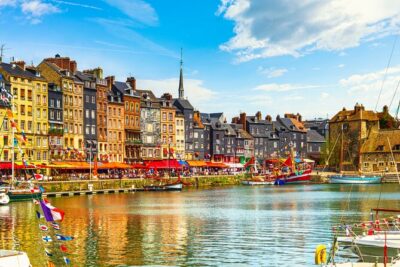
From Le Havre Breathtaking Honfleur and Deauville Shore Excursion
Read our review →
Deluxe Paris Shore Excursion from Le Havre with Seine Cruise
Read our review →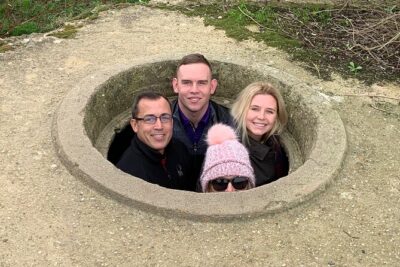
Private tour landing beaches from Le Havre cruise terminal
Read our review →Browse the lists this tour appears in