Review · BONAIRE
Shore Excursion: North and South Sides of Bonaire
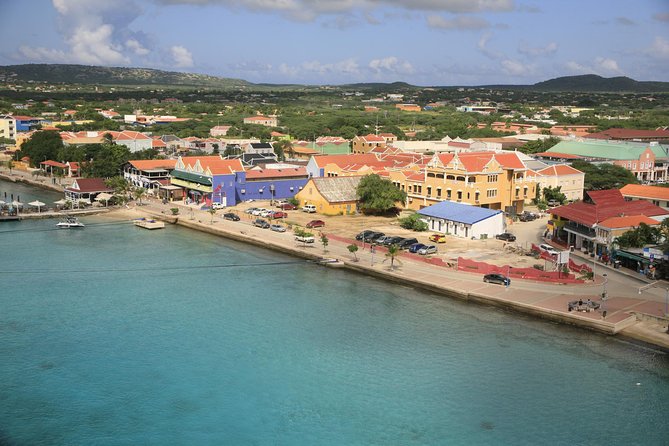
Bonaire’s appeal comes into focus when you leave Kralendijk and follow the island’s rough coastal roads. This three-hour tour takes you from sea turtles and pink flamingos in the north to salt pyramids and old slave huts in the south. It is a fast, useful introduction to an island that can feel much larger than it looks from the cruise pier.
I like two things right away: the route covers both ends of Bonaire, and the local guides often add far more than a string of photo stops. Guides such as Vanessa, Peter, Martin, Chela, and Eugene have been praised for explaining the island’s past, pointing out wildlife, and answering questions in a friendly way. The $45 price is also fair for a port-day overview.
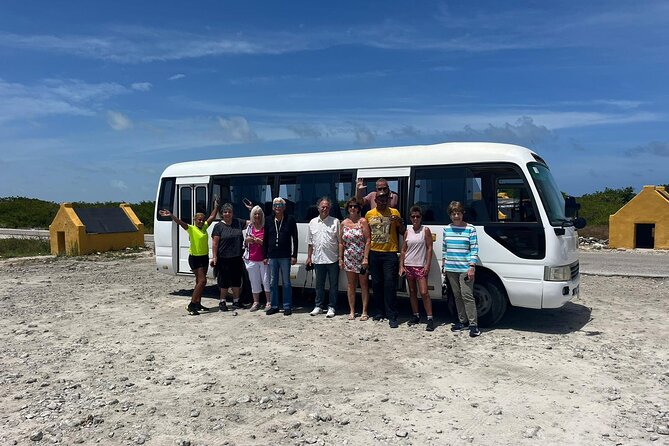
The main concern is the vehicle. Some departures use a comfortable air-conditioned van, while others have felt cramped, especially with seven to twelve adults aboard. The tour also moves quickly, and the advertised distillery visit may be replaced by Chich’i Tan Museum. Confirm the meeting point and vehicle arrangements carefully.
Key points to know before you book
- North and south in three hours: You see Goto Lake, Rincon, Kralendijk, the salt flats, slave huts, and southern beaches in one compact route.
- Flamingos are wild: You may see them close to the road, but they can also be far away or absent from an expected stop.
- The schedule is brisk: Most stops last only five to fifteen minutes, so this is a sightseeing sampler rather than a beach day.
- Two cultural stops may alternate: The route may include Cadushy Distillery or Museo Chich’i Tan, depending on the day and group.
- Vehicle comfort varies: Air conditioning is offered, but some departures have had weak cooling or tight seating.
- Cruise timing matters: Ship name, docking time, disembarkation time, and re-boarding time are required when you book.
Why this route works well on a cruise day
If you have only one day in Bonaire, it is hard to see much beyond Kralendijk without transport. This tour solves that problem by making a broad loop around the island, with a guide explaining what you are seeing along the way.
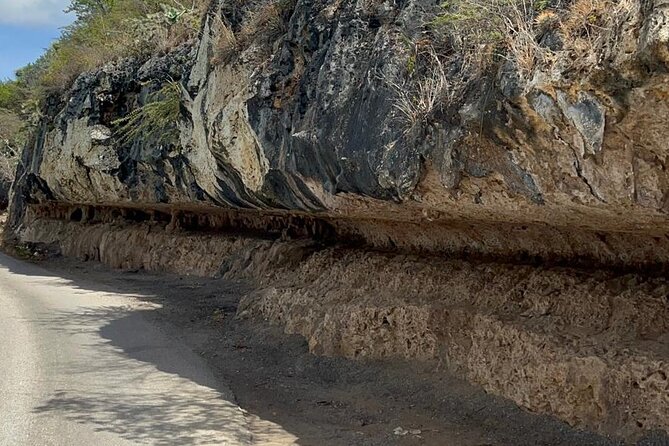
The route is not built around one grand sight. Its value comes from the mix: limestone cliffs, cactus country, flamingo habitat, old villages, salt production, slavery-era structures, and a few coastal views. You get a useful sense of how Bonaire’s natural resources shaped daily life.
The tour lasts about three hours, though some departures have run longer. That length fits a cruise stop well, provided the operator returns you on schedule. It also means you need to keep moving. A stop listed at five minutes may allow only a quick look, a few photographs, and a climb back into the vehicle.
The tour is available to people staying on Bonaire as well as cruise passengers. Pickup and drop-off are offered, and the departure time can be adjusted for non-cruise visitors. Cruise passengers should provide their ship and port schedule at booking so the operator can plan around the vessel.
More shore excursions around the world:
- FOR CRUISERS: Skip The Lines PRIVATE EPHESUS TOUR &On Time Return
★ 5.0 · 8,527 reviews - Top Choice For Cruisers: Ephesus, Mary’s House WITH TICKETS+LUNCH
★ 5.0 · 7,233 reviews - PRIVATE EPHESUS TOUR FOR CRUISERS: On-time Return and Skip-Line
★ 5.0 · 5,807 reviews
Starting in Kralendijk and heading north
After pickup near the cruise port, you pass through Kralendijk, Bonaire’s capital. This part is less about a formal walking tour and more about getting oriented. Your guide points out city landmarks while the vehicle heads toward the northern coast.
This is a good moment to ask questions. The best guides on this route, including Peter, Vanessa, Martin, and Chela, have been praised for explaining local customs, history, and the island’s economy in plain terms. Some guides speak more than one language, so multilingual departures may be available.
The road soon feels more open, with cacti and dry coral terrain replacing the town streets. Keep your camera ready. Guides sometimes make extra stops when flamingos or other animals appear, but you need to stay quiet. Sudden noise can send the birds away.
1,000 Steps: a famous name with a short stop
1,000 Steps is one of Bonaire’s best-known coastal viewpoints. The name is playful rather than exact. The stairway leads down through pale limestone to a small beach made of white sand and bleached coral pieces.
The cove is framed by limestone cliffs, and the water is clear and shallow. Sea turtles are often found in the area, so watch the water rather than only the rocks. One departure spotted a turtle here, but wildlife is never guaranteed.
The scheduled stop can be as short as five minutes. That is enough to see the viewpoint and take photographs, but it is not enough for a relaxed swim or snorkel session. The climb down and back up also makes this a poor choice for anyone who needs extra time on stairs.
Some promotional timing has suggested a much longer visit, but three hours cannot realistically allow nearly an hour here, a full distillery visit, and all the southern stops. Treat 1,000 Steps as a scenic lookout, not a beach excursion.
Karpata and the road toward Goto Lake
As you continue north, the guide may point out Karpata Country House, an old plantation property beside the coastal road. It adds context to the former plantation system and the way Bonaire’s inland and coastal areas were used.
This is one of those moments when the guide matters more than the stop itself. You may not spend long outside the vehicle, but a local explanation can connect the old country house with the island’s plantations, salt works, and changing economy.
The road toward Goto Lake passes through thick stands of cactus. The setting is dry and rugged, with views toward Washington Slagbaai National Park. This is not a polished theme-park ride. Bonaire’s beauty here comes from sun, stone, thorny plants, and wide open space.
Same port, a different plan for the day:
- From the Port of Kos: Full Day Boat Cruise to 3 Islands
★ 4.8 · 5,137 reviews - Hilo Shore Excursion: Volcanoes National Park & Black Sand Beach
★ 4.5 · 2,338 reviews - Arrecife: Timanfaya and Green Lagoon for Cruise Passengers
★ 4.6 · 2,010 reviews - For cruise passengers: Guided ATV Tour of Dutch & French St. Maarten
★ 5.0 · 1,552 reviews
Goto Lake and the search for flamingos
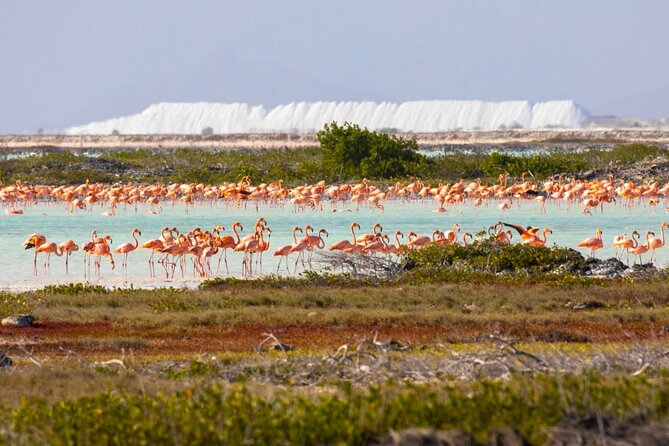
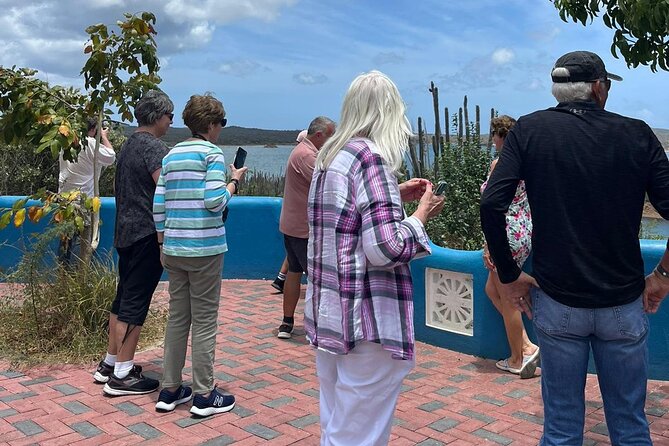
Goto Lake is a saltwater lagoon and one of Bonaire’s best-known flamingo areas. The vehicle follows an access road through cactus country to an observation area, where you may see the birds feeding, resting, or moving across the water.
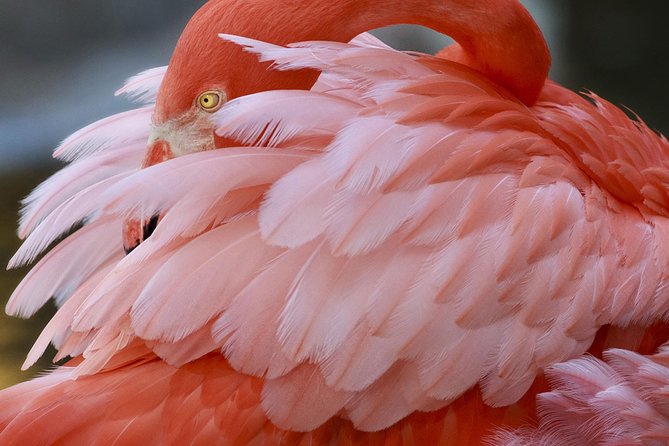
Bonaire is one of the few places where pink flamingos nest. That fact gives the stop real importance, but it also sets an honest expectation: the birds are wild. They may be close to the road, far across the lagoon, or gathered in a different area on the day of your visit.
Drivers keep one another informed about where the largest groups have been spotted, and they may make extra photo stops. Still, nobody can guarantee a close view. Bring patience and use a zoom lens if you have one.
This stop can feel rushed. If flamingos are the main reason you booked, tell your guide early. A quiet group may get a better look than a noisy one, and asking for a brief pause can help if the schedule allows.
Rincon, Bonaire’s oldest village
Rincon was established by the Spanish in the early 1500s and is described as the oldest continuously existing village in the Netherlands Antilles and Aruba. Its location inland helped protect it from attacks and gave it a role in the island’s plantation era.
You may not have time for a long walk through the village. Instead, the guide gives you the essential story while pointing out landmarks from the vehicle or during a brief stop. That makes Rincon a good example of what this tour does best: it gives you context without asking you to spend the whole day in one place.
If you want a slow, detailed visit to Bonaire’s villages, this is not enough. If you want to understand why Rincon matters, the stop is worthwhile.
Cactus liqueur or Chich’i Tan Museum
The cultural portion of the route can vary. Some departures visit Cadushy Distillery, where you can see how cactus liqueur is made and possibly sample it. Other departures visit Museo Chich’i Tan, a roughly 200-year-old house filled with old musical instruments, tools, pottery, and household items.
The distillery is an unusual Bonaire stop. Cactus is not just scenery here. It is part of the island’s practical life, and turning it into liqueur gives you a small taste of local enterprise.
Chich’i Tan offers a different lesson. The old house and household objects show how people lived during the 1800s. For some visitors, this museum provides more useful cultural context than a short tasting stop.
Do not assume both stops are included. The operator chooses one in consultation with the group, and several departures have skipped the distillery. If cactus liqueur is essential to your plans, ask before boarding.
The salt flats and Bonaire’s hard past
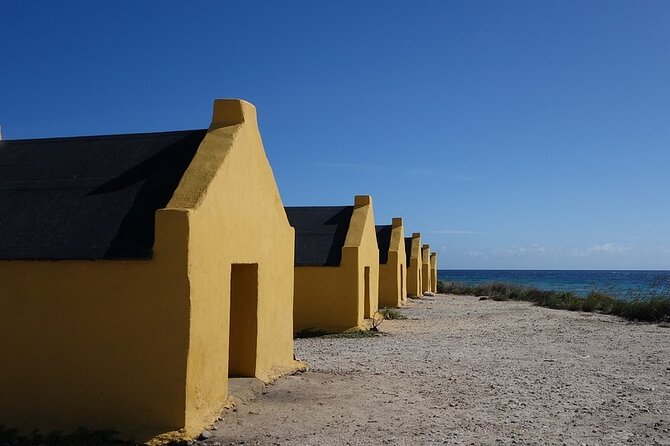
The southern part of the tour explains Bonaire’s salt industry. At Pekelmeer, you see white salt pyramids, pink pools, and broad evaporation ponds. The colors change with water, minerals, and sunlight, making this one of the island’s most memorable photo areas.
Salt was once central to Bonaire’s economy. The ponds were not simply scenic water features. They were working sites where salt was gathered, piled, and prepared for export. You may also see activity connected with modern salt production.
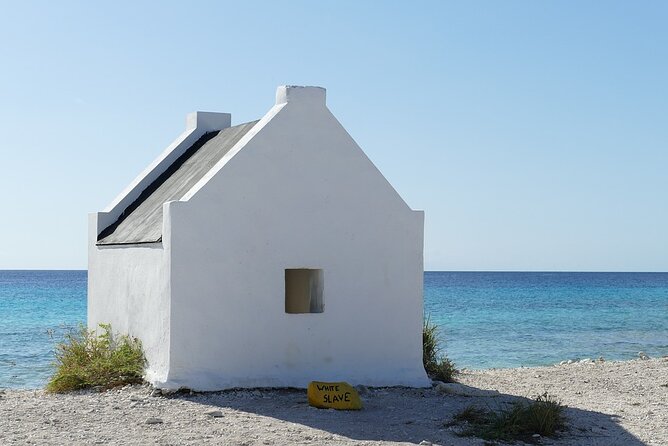
The stop at White Pan brings the island’s history into sharper focus. Small stone slave huts remain near the salt works. Enslaved people from Africa were forced to work in the salt pans and plantations until slavery ended in the Dutch Antilles in 1863.
The huts are simple and stark. That is exactly why they matter. They show how workers were housed during the week, far from the main settlements, in conditions designed around labor rather than comfort. A good guide will explain this without turning the stop into a rushed photo opportunity.
The salt flats can be intensely sunny, so bring water and sun protection. Bottled water is included, but food and other drinks are not.
Willemstoren Lighthouse and Sorobon Beach
Near the southern tip, you may see Willemstoren, also called Lacre Punt. It was the first lighthouse built on Bonaire and is not open to the public. The stop is generally about viewing and photographing it from outside.
Sorobon Beach provides a final coastal glimpse. The planned stop is short, around five minutes, and the operator may explain how to return if you want to remain there. This is important: the tour is designed to return you to the port, not to give you a long beach stay.
If Sorobon is your main goal, ask exactly how much time is available before the tour begins. A delayed start, a slow group, or longer photo stops can force the guide to shorten a later stop. Cruise excursions need a firm return time, and the operator will usually protect that schedule.
Transport, group size, and comfort
The vehicle may be air-conditioned or open-air depending on the season. Air conditioning is a major factor in Bonaire’s heat, but it has not worked perfectly on every departure. Some people have found the back rows hot, with little airflow, while others have had a comfortable ride with strong cooling.
Group size can reach 60 people, but the practical vehicle experience is usually a smaller van. A 12-seat Toyota Hiace has been used, and a group of seven can feel fine for some people but tight for larger adults or anyone seated in the back.
You climb in and out several times. The vehicle may not suit anyone with mobility limits, and the short stops leave little time to settle in. If you dislike cramped seating, ask how many people are expected before you commit.
The upside of a smaller vehicle is a more personal guide experience. Guides can answer questions, stop for wildlife, and adjust the commentary to the group. The downside is that comfort depends heavily on the day’s passenger mix and the condition of the van.
Is $45 a good value?
At $45 per person, this tour offers a lot of ground for the money. You get a driver-guide, bottled water, port pickup and return, and a route covering both the north and south sides of Bonaire. Taxi fares to several separate sights could quickly cost more, especially if you want the guide’s local explanations.
The value is strongest if you want orientation. You see enough of the island to decide where you might return for a longer stay, perhaps for a beach visit, museum stop, or wildlife outing.
The value is weaker if you want comfort, long stops, or a guaranteed tasting. You are paying for range, not leisure. The tour gives you many brief impressions rather than one fully explored site.
Free cancellation is available up to 24 hours before the start time. Changes or cancellations within 24 hours are not refundable. A minimum of four people is required, and the tour can be canceled if that minimum is not met.
Who should book this Bonaire tour?
I would choose this tour if you are visiting Bonaire for the first time, have only a few hours from a cruise ship, and want to see the island’s major natural and historic features. It is also a good fit if flamingos, salt flats, and island history matter more to you than beach time.
Guides such as Vanessa, Peter, Martin, Chela, and Eugene have helped make the route memorable through local stories and flexible photo stops. The human part of the experience can be excellent.
I would hesitate if you have trouble with stairs, need generous legroom, or want a guaranteed distillery visit. I would also avoid it if Sorobon Beach is your central aim and you need a long stay there.
Before booking, send your ship information, confirm the meeting point near the port, and ask whether the day’s cultural stop will be the distillery or Museo Chich’i Tan. Then expect a quick, sometimes crowded ride that gives you a useful first look at Bonaire’s wildlife, history, and salt country.
FAQ
How long does the North and South Sides of Bonaire tour last?
The tour lasts approximately three hours. Some departures may run slightly longer, but the schedule is built around returning cruise passengers to the port on time.
Does the tour pick up cruise ship passengers?
Yes. Cruise port pickup and drop-off are included. At booking, you need to provide your ship name, docking time, disembarkation time, and re-boarding time.
Will I definitely see flamingos?
No. Goto Lake and the salt flats are flamingo areas, but the birds are wild. They may be close to the road, far away, or gathered somewhere else on the day of your tour.
Is the Cadushy Distillery included?
The tour may visit Cadushy Distillery or Museo Chich’i Tan. The operator chooses between them in consultation with the group, so a distillery visit and tasting are not guaranteed.
Is the vehicle air-conditioned?
The vehicle may be air-conditioned or open-air depending on the season. Air-conditioned vans are used, but cooling has not worked perfectly on every departure, and seating can feel tight in a full van.
Can I cancel for a refund?
You can cancel at least 24 hours before the start time for a full refund. Cancellations or changes made within 24 hours are not accepted for a refund.
Fresh shore excursions around the world
- Shore Excursion Hobart and Coal River Valley★ 5.0 · 7 reviews
- Private Shore Excursions from Chan May port to My Son Holyland & Hoi An City★ 5.0 · 2 reviews
- Hobart Shore Excursion: Bonorong Bus★ 5.0 · 4 reviews
- Cruise Ship – Port Arthur Shore Excursion – Hobart★ 5.0 · 15 reviews
- Shore Excursion – nipaluna (Hobart) Highlights★ 5.0 · 2 reviews
- Cu Chi Tunnels Private Shore Excursion – From Cruise Port★ 5.0 · 2 reviews
- Private Shore Excursion from Phu My Port: Food & Sights by Motorbike★ 5.0 · 10 reviews
- The Soul of Saigon Shore Excursion from Saigon Port★ 5.0 · 2 reviews
Shore Excursions, compared.
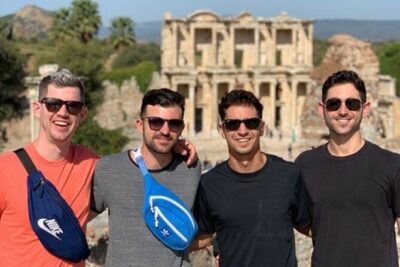
FOR CRUISERS: Skip The Lines PRIVATE EPHESUS TOUR &On Time Return
Read our review →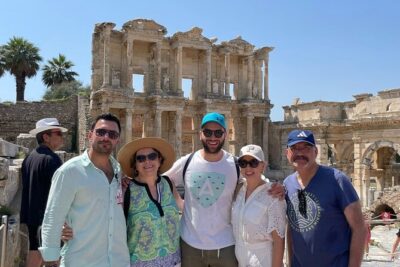
Top Choice For Cruisers: Ephesus, Mary’s House WITH TICKETS+LUNCH
Read our review →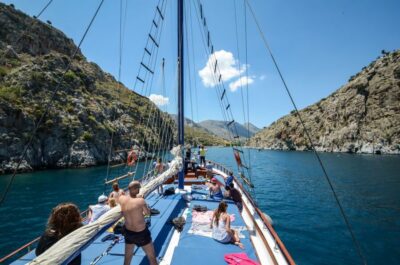
From the Port of Kos: Full Day Boat Cruise to 3 Islands
Read our review →
Hilo Shore Excursion: Volcanoes National Park & Black Sand Beach
Read our review →
Arrecife: Timanfaya and Green Lagoon for Cruise Passengers
Read our review →
For cruise passengers: Guided ATV Tour of Dutch & French St. Maarten
Read our review →
PRIVATE TOUR FOR CRUISERS: Mary’s House (Meryemana) and Ephesus
Read our review →