
Review · BERLIN
Rickshaw Tour-Cruise Ship guests arrive 9.30 upto 11.30 am Berlin
Berlin’s central sights make far more sense when you move between them in a small rickshaw instead of sitting behind a bus window. This private tour links Alexanderplatz, Museum Island, Checkpoint Charlie, the Holocaust Memorial, and the Brandenburg Gate while your guide explains how the city changed from Prussian capital to divided Cold War frontier.
I especially like the flexible pickup and route, since you can begin at your hotel or another agreed meeting point. I also like the close access to monuments, which means you can get near the sights and stop for photographs without tackling long walks. The main consideration is space: the advertised price covers up to two people, and larger groups need several rickshaws.
Key points to know
- Private for up to two people: You ride with your own driver and guide rather than joining a large group.
- A strong central-Berlin route: The tour connects Alexanderplatz, Museum Island, Bebelplatz, Gendarmenmarkt, Checkpoint Charlie, Potsdamer Platz, and the government district.
- Useful for limited mobility: You only need a few steps to enter the rickshaw, and a walker can travel with you.
- Pickup can be arranged: Hotel or designated meeting-point pickup is available, with the tour ending back at the meeting point.
- Flexible timing and interests: The route can be adjusted for a shorter highlight tour, a four-hour outing, or a full-day plan.
- Simple comforts included: You receive a cozy blanket and drinks, including bottled water, soft drinks, Berlin beer, or Berlin sparkling wine.
Why a Rickshaw Works So Well in Berlin Mitte
Berlin’s central district is spread out. A walk between Alexanderplatz and the Brandenburg Gate can take a good part of your morning, especially if you stop often. A bus covers the distance, but it cannot pull up close to a monument or pause whenever you spot a good photograph.
The rickshaw sits between walking and driving. You can cover a useful distance while staying close to the streets, squares, and buildings that give Berlin its character. Your guide can point out details as you move, then stop when a place deserves more time.
This format is especially practical if one person in your party has trouble walking. The tour provider says you can bring a walker, and you can remain in the rickshaw if stepping out is difficult. That does not turn the experience into a fully wheelchair-accessible tour, since you do need a few steps to enter, but it can reduce the strain of a long sightseeing day.
The standard experience lasts about three hours and costs $264.35 per group of up to two. That is not a cheap way to get from one place to another, but it is reasonable if you value a private guide, flexible stops, drinks, and the ability to see many central sights in a short time. For two people, the cost works out to roughly $132 each.
More Tuk-Tuk Shore Excursions around Berlin:
- Kochi Sightseeing Tuk-Tuk Tour with Pickup From Cruise Ships
★ 5.0 · 194 reviews - Kochi Tuk-Tuk Sightseeing Tour with Cruise Ship Pickup
★ 5.0 · 190 reviews - Kochi Tuk-Tuk Private Tours with Pickup from Cruise Ships
★ 5.0 · 181 reviews
Starting at Alexanderplatz and the TV Tower
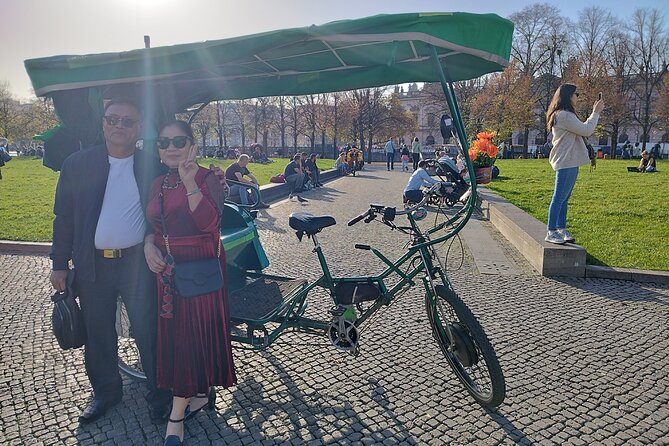
The usual starting point is the Berliner Fernsehturm, Berlin’s famous television tower at Alexanderplatz. You will not go up the tower as part of this tour, and admission is not included. Instead, it gives you a clear starting marker in one of the city’s busiest central squares.
From here, the rickshaw passes the Red Town Hall, Marien Church, and Neptune Fountain before heading toward Museum Island. This opening stretch quickly introduces the contrast that defines Berlin: modern transport and concrete around Alexanderplatz, followed by older civic and religious buildings closer to the River Spree.
If you are arriving from a cruise ship, the stated pickup window is from 9:30 to 11:30 a.m. Confirm your exact meeting point and start time in advance. The provider also offers pickup at a hotel or another agreed location, so the tour can begin without making you cross the city first.
Museum Island and Unter den Linden
Museum Island is one of Berlin’s most important cultural areas, and even a short stop gives you plenty to see from the outside. The route takes in the Berlin Cathedral, the reconstructed City Palace, the Old Museum, the Old National Gallery, the Pergamon Museum, and the Bode Museum.
The stop is listed as about ten minutes, so think of it as an orientation and photo break, not a museum visit. Museum admission is not included, and the schedule does not allow time to tour the collections. If you want to enter one of the museums, a longer custom booking would make more sense.
From here, you move along Unter den Linden, Berlin’s grand royal boulevard. The avenue connects many of the city’s major sights, so it works as both a scenic ride and a useful lesson in Berlin’s former role as a seat of kings and emperors.
Bebelplatz and the Memory of the Book Burning
Bebelplatz is a small square with a difficult story. The surrounding Forum Fridericianum includes the State Opera, Humboldt University, the State Library, the Law Faculty, and St. Hedwig’s Cathedral, Berlin’s first Catholic church.
The memorial here recalls the Nazi book burning of May 10, 1933, when around 25,000 books were destroyed. The memorial is easy to miss if you rush through the square. Your guide can help you understand what happened and why the empty underground library, visible through glass, carries such weight.
This is one of the tour’s strongest features. You are not only checking off famous buildings. You are seeing how a handsome urban square can also mark an attack on free thought and culture.
More shore excursions around Berlin:
- All-in-One Berlin Shore Excursion from Warnemunde
★ 4.5 · 293 reviews - Deluxe Berlin: Hassle-Free Shore Tour from Warnemunde Cruise Port
★ 4.5 · 82 reviews - Berlin & Sachsenhausen Concentration Camp Tour from Warnemünde and Rostock Port
★ 4.5 · 60 reviews - Explore Berlin Shore Excursion: Top Attractions Private Tour from Warnemuende
★ 5.0 · 41 reviews
Gendarmenmarkt’s Classical Setting
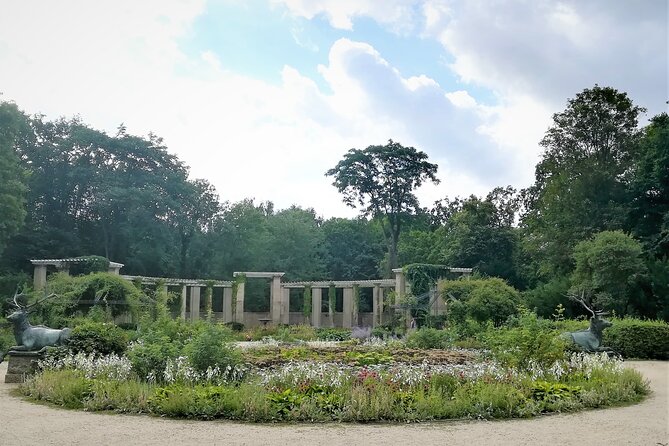
Gendarmenmarkt is one of Berlin’s most graceful squares. The former Royal Concert Hall sits between the German Cathedral and French Cathedral, creating a carefully balanced architectural scene.
The stop lasts about ten minutes and is free to visit from the outside. Restoration work or access limits can affect what you see at any given time, so your guide may adjust the stop if needed.
I like this part of the route because it offers a change of mood. After the serious memorial at Bebelplatz, Gendarmenmarkt shows Berlin as a city of music, ceremony, and grand public design. It is also a good place for photographs because the buildings frame the square from several angles.
Checkpoint Charlie and the Former Wall Border
Checkpoint Charlie was one of the best-known crossing points between East and West Berlin during the Cold War. The name refers to the Allied checkpoint, and the site became a symbol of the city’s division.
The stop is brief, around five minutes, so do not expect a full Cold War museum visit. The area can feel commercial and busy, with displays and souvenir shops competing for attention. That is part of the practical reason to have a guide here. A good explanation helps separate the real history from the theatrical presentation.
The rickshaw is useful along the former border route because you can move between several connected sites without spending energy on long walks. You will see original sections of the Berlin Wall near the Topography of Terror, giving the divided city a more physical presence than a single checkpoint replica can provide.
The Topography of Terror and Potsdamer Platz
The Topography of Terror documentation center occupies the former site of the SS and Gestapo headquarters. The outdoor remains and documentation center focus on the machinery of Nazi persecution. Admission to the stop is free, but the short tour schedule means you will mainly receive an introduction and see the setting from outside.
Nearby, Martin-Gropius-Bau hosts major exhibitions, and the route also passes the former Prussian Parliament. These details help you read the district as more than a collection of isolated attractions. The buildings sit along a former border strip where political power, war, and later reconstruction all meet.
Potsdamer Platz offers a sharp visual shift. Once damaged and divided, it became one of Europe’s largest construction sites and was rebuilt with tall modern buildings, including the Sony Center. The stop is about ten minutes.
You may like the contrast between the old border line and the futuristic architecture. You may also find the modern section less atmospheric than Berlin’s historic squares. That is not a flaw in the tour, but it is worth knowing that the route mixes memorials with contemporary commercial architecture.
The Holocaust Memorial and Brandenburg Gate
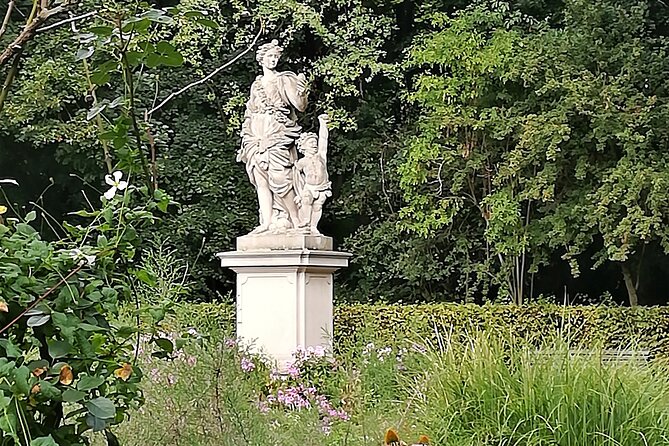
The Memorial to the Murdered Jews of Europe covers a large open area with 2,711 concrete slabs. From the outside, the changing heights and narrow paths create an uneasy sense of uncertainty. The memorial commemorates the murder of more than six million Jews under National Socialism.
The tour allows about ten minutes here. You can walk among the slabs, but the short stop is not enough for a full visit to the underground information center. If you want more time for the memorial, tell your guide before the tour begins so the route can be adjusted.
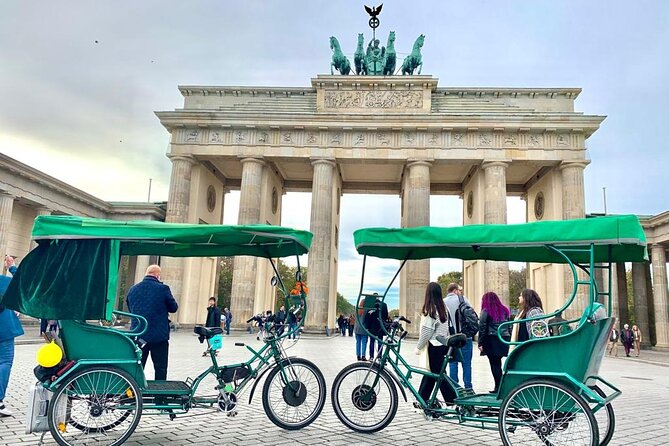
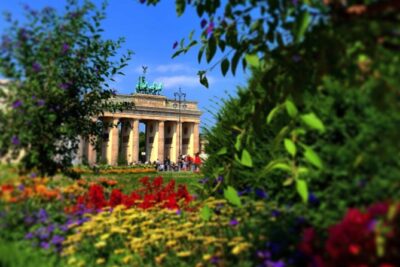
Next comes the Brandenburg Gate, Berlin’s most recognizable landmark. Once located beside the Berlin Wall, it later became a symbol of German reunification. The gate is especially valuable as a stop because it links several periods of the city’s past: Prussian power, Nazi spectacle, Cold War division, and modern Germany.
Your guide can usually bring you close enough for photographs without the long approach required by a coach tour. Still, this is a popular public space, so expect other people and possible event barriers.
The Reichstag, Government District, and Führerbunker Site
The route continues into the government district, where you see the Reichstag, home of the German Bundestag, and the Chancellery. You also pass the Memorial to the Murdered Sinti and Roma, which commemorates the Nazi persecution and murder of Sinti and Roma people.
The Reichstag exterior is the focus here. Entry to the dome is not part of the rickshaw tour, and visits to the building require separate arrangements. The tour is useful for getting your bearings, especially if you plan to return later for a longer visit.
The stop at the Führerbunker site is another brief historical marker. The bunker itself is not open as a museum, and the location is deliberately understated. Your guide can explain where it was and what happened there, but you should not expect visible bunker rooms or a dramatic structure.
That understatement matters. Berlin often remembers its darkest places with plaques and simple signs rather than grand monuments. A guide helps you understand why.
The Opera House and Berlin Cathedral
The route returns through Unter den Linden, with another look at the royal boulevard and the Opera House. It then reaches the Berliner Dom, or Berlin Cathedral, where you have about ten minutes.
The cathedral is one of the most striking buildings on Museum Island, with a large dome and an imposing riverside setting. Admission is not included, so this stop is for viewing and photographs rather than an interior visit.
The route contains some overlap, since Unter den Linden and Museum Island appear at more than one point. That is normal for a flexible city tour, and it lets the guide adjust the order according to traffic, timing, and your interests. If you prefer fewer repeated views and more time in Tiergarten or along the River Spree, say so at the start.
How Flexible Is the Route?
The advertised three-hour program covers the central highlights, but the operator also describes two-hour, four-hour, and full-day options. A two-hour outing concentrates on the main historic sights. A four-hour version can add Tiergarten Park and the River Spree, while a full day may include the East Side Gallery, museum access, or less familiar parts of Berlin.
This flexibility is important because the listed stops cannot all receive equal attention in three hours. Several stops last only five or ten minutes. That is enough for a guide’s explanation and photographs, but not enough for a serious museum visit or a long walk through each memorial.
Tell the guide what matters most to you. You might focus on Nazi-era sites, Cold War Berlin, royal architecture, photography, or a general first look at the city. The provider’s guides include Levent, Gregor, and Levi in the supplied information, and the strongest descriptions of the experience point to personable guiding, useful historical explanations, humor, and careful driving.
Comfort, Group Size, and Practical Value
The rickshaw includes a cozy blanket and drinks. The available choices are bottled water, soft drinks, Berlin beer, and Berlin sparkling wine. These are small touches, but a blanket matters on a cold Berlin day, particularly because you are sitting rather than walking for much of the tour.
For two people, you receive a private vehicle and can shape the route around your pace. Groups of three to four use two rickshaws, while groups of five to six use three. The vehicles are arranged to arrive together, but several rickshaws can make conversation and group photographs less simple.
The tour is offered in English and confirmation is provided at booking. It is near public transportation, and most people can participate. Tips are not included, so bring extra money if you feel the guide earned it.
Free cancellation is available up to 24 hours before the start time. Changes or cancellations inside that window are not accepted for a refund.
Who Will Get the Most From This Tour?
I would choose this outing for a first visit to Berlin when I want a fast, private introduction to the central sights. It is also a smart choice for couples, older visitors, cruise ship passengers with limited time, and anyone who wants to avoid a full day of walking.
It works particularly well for a person with limited mobility who can take a few steps into the vehicle. The ability to carry a walker and stop close to monuments can make the day much easier.
I would not choose it as my only Berlin experience if I wanted extended museum time, a detailed visit inside the Reichstag, or long walks through memorials. For that, book a longer custom route or use this tour as an orientation on your first day, then return to the places that deserve more time.
Should You Book the Berlin Rickshaw Tour?
Book it if you value personal attention, close access, and a flexible route more than the lowest possible price. The tour packs a remarkable number of major sights into about three hours, and a good guide can turn a string of monuments into a connected story.
Before booking, decide how much time you want at each stop. At $264.35 for up to two people, the value is strongest when you use the private format well: request the pickup point that saves you time, name your main interests, and ask the guide to adjust the order.
Skip it if you prefer to explore museums at length or if you are happy covering Berlin by public transport and on foot. For a gentle, information-filled first look at Berlin Mitte, especially when walking is an issue, this is one of the more practical ways to get oriented.
FAQ
Where does the Berlin rickshaw tour start?
The usual starting point is the Berliner Fernsehturm at Alexanderplatz, though pickup can be arranged at your hotel or another designated meeting point.
How long does the standard tour last?
The standard tour lasts approximately three hours. Two-hour, four-hour, and full-day options are also described, depending on the route and your interests.
How many people can ride for the listed price?
The price of $264.35 covers one group of up to two people. Groups of three to four use two rickshaws, and groups of five to six use three rickshaws.
Is this tour suitable for someone with limited mobility?
The tour is described as suitable for less-mobile people who can take a few steps into the rickshaw. A walker can be carried, and the vehicle can stop close to monuments for photographs.
Are admission tickets included?
No museum or attraction admission tickets are included. The listed stops are mainly exterior visits and orientation stops, with free admission noted for several locations.
What happens if I need to cancel?
You can receive a full refund if you cancel at least 24 hours before the experience starts. Cancellations or changes made less than 24 hours before the start time are not accepted for a refund.
Fresh shore excursions around Berlin
- Warnemuende Shore Excursion: Berlin Private Sightseeing Tour from Rostock★ 5.0 · 4 reviews
- Warnemuende Shore Excursion: Private Berlin Tour★ 4.5 · 27 reviews
- Deluxe Berlin Tour from Warnemunde or Rostock Cruise Port★ 4.5 · 11 reviews
- Group Driving Tour 1 to 6 people. Berlin Shore Excursion incl pick-up at Port★ 5.0 · 8 reviews
- Semi-Private Berlin Highlights Shore Excursion from Warnemünde and Rostock Port★ 5.0 · 6 reviews
- Private All-in-One Berlin Shore Excursion from Warnemünde Port★ 5.0 · 35 reviews
- Full Day Tour of Berlin from Warnemunde and Rostock Cruise Port★ 4.5 · 8 reviews
- Best Berlin Shore Excursion from Warnemunde Rostock Cruise Port★ 3.0 · 2 reviews
Berlin Shore Excursions, compared.
All-in-One Berlin Shore Excursion from Warnemunde
Read our review →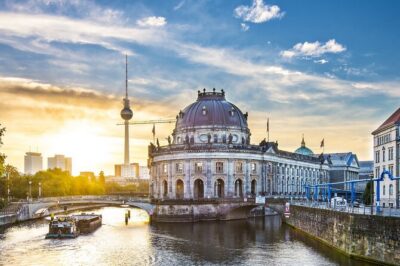
Deluxe Berlin: Hassle-Free Shore Tour from Warnemunde Cruise Port
Read our review →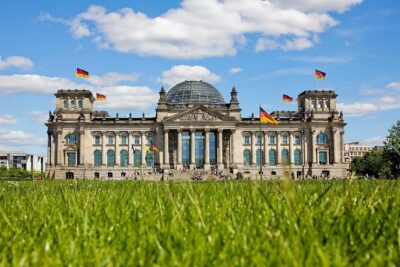
Berlin & Sachsenhausen Concentration Camp Tour from Warnemünde and Rostock Port
Read our review →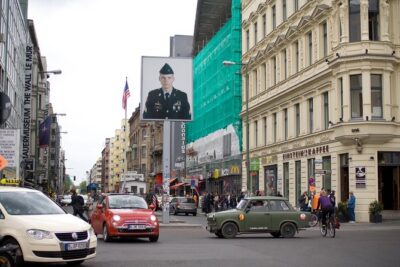
Explore Berlin Shore Excursion: Top Attractions Private Tour from Warnemuende
Read our review →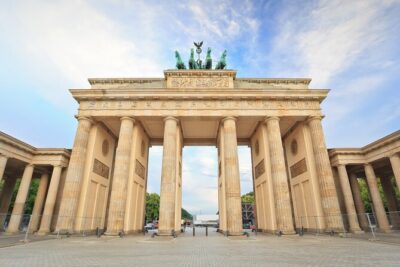
Private All-in-One Berlin Shore Excursion from Warnemünde Port
Read our review →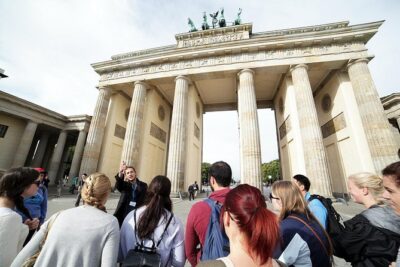
Warnemuende Shore Excursion: Private Berlin Tour
Read our review →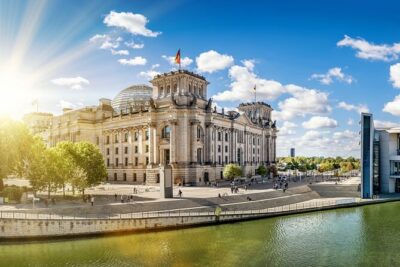
Deluxe Berlin Tour from Warnemunde or Rostock Cruise Port
Read our review →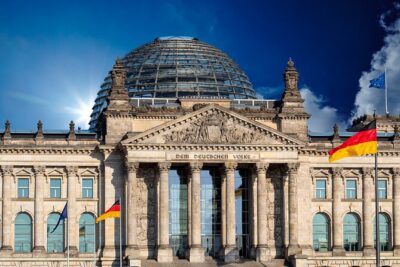
Deluxe Shore Excursion to Berlin from Warnemunde Cruise Port
Read our review →Browse the lists this tour appears in