
Review · HANGA ROA
Easter Island Shore Excursion – Small Group Tour
Easter Island packs an astonishing amount into one day: unfinished Moai at Rano Raraku, fifteen restored figures at Tongariki, a royal beach at Anakena, and the Birdman village above Rano Kau. This eight-person tour gives you a practical way to see the island’s major sites from a cruise ship without joining a large coach.
I like the careful route and the local cultural insight. You visit the quarry before Tongariki, then move across the island to the beach and the inland ahu, with a guide explaining how the sites connect. I also like the easy port pickup and return to Hanga Piko. The main drawback is the pace: six major stops in 390 minutes makes for a full day, and the $80 national park ticket is not included.
Key points at a glance
- Rano Raraku comes first: Spend 105 minutes at the quarry where the Moai were carved.
- Only eight people per group: The small van and limited group size allow a more personal pace than a large shore bus.
- Six major archaeological sites: The route covers Rano Raraku, Tongariki, Anakena, Ahu Akivi, Rano Kau, and Orongo.
- A local guide adds context: Rose, a Polynesian guide, received particular praise for explaining history, language, traditions, and culture.
- Cruise-friendly timing: Meet at Hanga Piko, then return to the pier before departure.
- Budget for the park ticket: The $80 national park entrance fee is extra and should be paid in cash.
Why this route works for a cruise stop
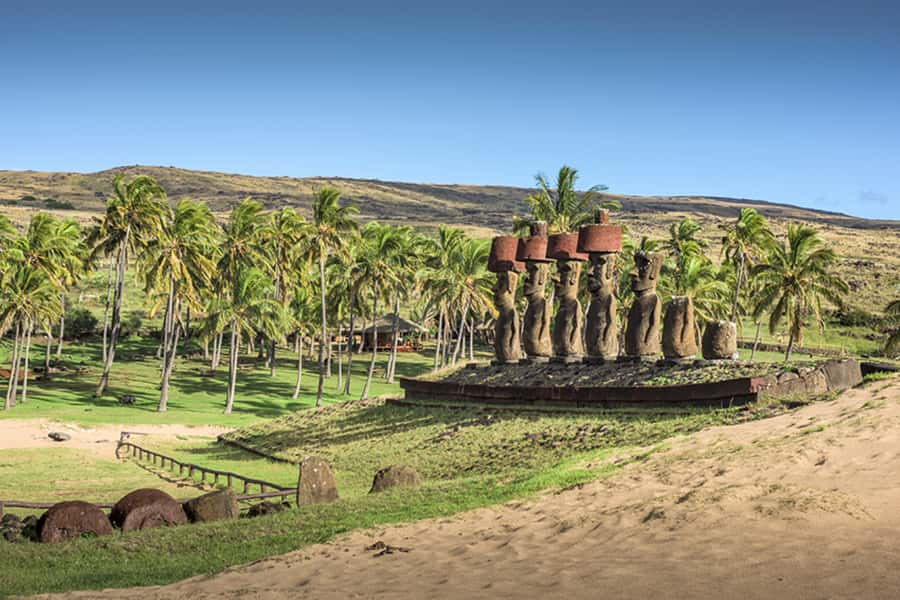
A cruise call on Easter Island leaves you with one big problem: the island is too important to see casually, yet your time ashore is limited. This tour addresses that problem by linking the principal archaeological sites in a single loop.
The total duration is 390 minutes, or six and a half hours. That is long enough to cover the island’s major sights, but not long enough for an unhurried visit at every one. You will spend more time at Rano Raraku and Orongo, while stops such as Rano Kau and Ahu Akivi are shorter.
The route begins and ends at Hanga Piko, the pier area used for cruise access. The operator plans to be there before the first tender arrives and waits with a sign bearing your name. Once the group is together, you board a private vehicle and set off.
That setup matters. Tender operations can be slow and unpredictable, so a guide already waiting at the pier removes one common source of stress. At the end, you are returned to the same area in time to reach the tender before the ship leaves.
The group is limited to eight people. That does not make the tour private in the strictest sense, since other people may join you, but it should feel much closer to a private outing than a large bus excursion. You have a better chance of hearing the guide clearly, asking questions, and keeping the group moving.
More Small Group Shore Excursions in the world:
- Ephesus: Small Group Tour for Cruise Passengers
★ 4.8 · 1,100 reviews - Mykonos Small Group Tour for Cruise Passengers — Port Pickup
★ 5.0 · 597 reviews - Ephesus Small Group – Semi Private Shore Excursion
★ 5.0 · 406 reviews
Rano Raraku: the quarry where the Moai began
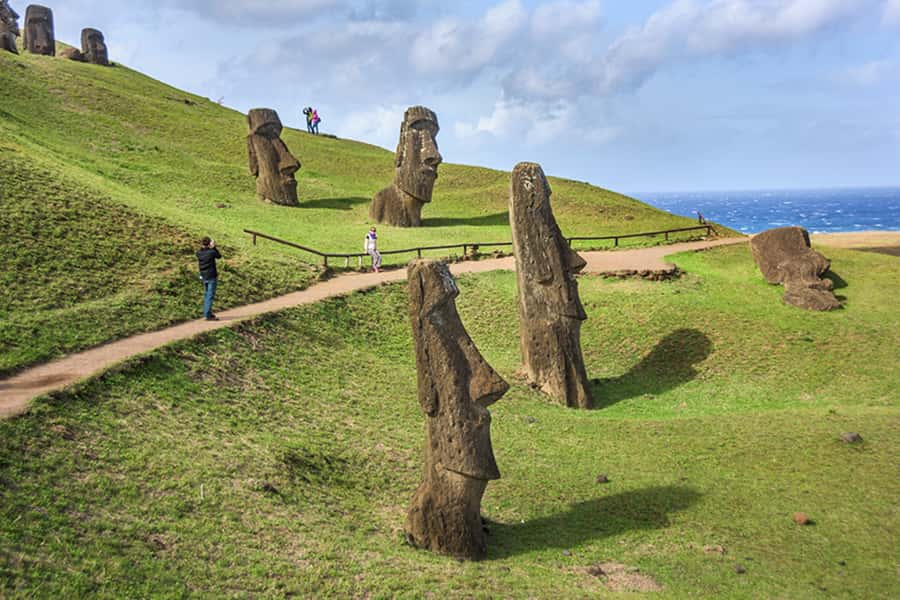
The first major stop is Rano Raraku, with 105 minutes set aside for a guided visit. This is the most important stop on the route for understanding how the Moai were made.
Rano Raraku is the island’s only tuff quarry. Tuff is a soft volcanic stone that could be shaped more easily than the harder rock found elsewhere. Here, carvers created the statues before they were moved to ceremonial platforms, known as ahu, around Rapa Nui.
The site is especially powerful because the work appears unfinished. You can see Moai still attached to the quarry rock or left partway through the carving process. Rather than looking at isolated statues, you begin to understand the scale of the work and the decisions involved in shaping, removing, and transporting each figure.
The 105-minute stop is the longest visit of the day, and rightly so. Rano Raraku needs time. You will want to listen to the guide, take photographs, and walk far enough to see how many statues remain around the slopes.
Wear shoes with a good grip. This is an outdoor archaeological site, and the tour notes that some places have limited access for people with mobility challenges. Anyone who needs completely smooth paths should take that warning seriously.
Ahu Tongariki and the famous row of fifteen
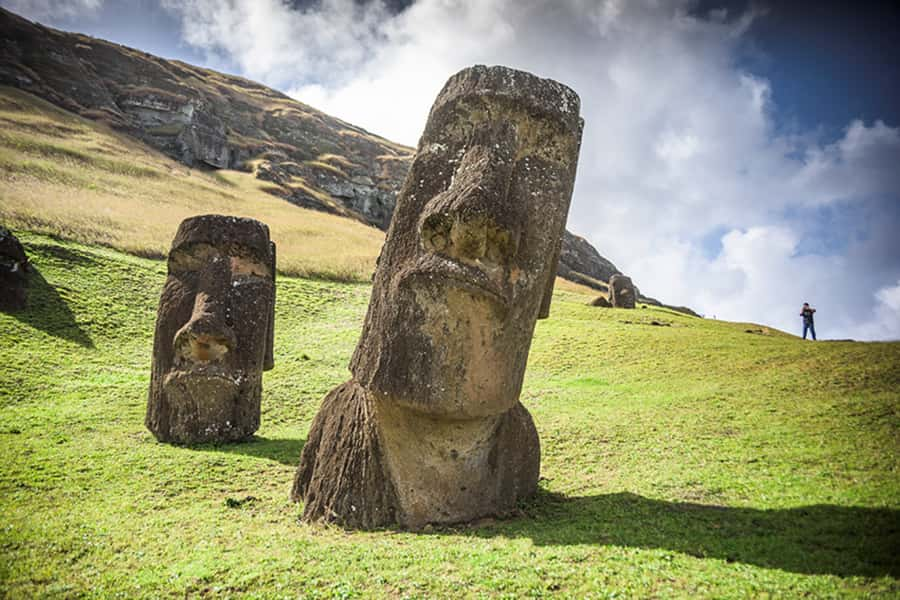
After a 15-minute drive, the van reaches Ahu Tongariki. The guided visit lasts 45 minutes.
Tongariki is the island’s largest restored ahu. Fifteen Moai face inland with their backs toward the sea, a view that has become one of Easter Island’s defining images. The scale is different from Rano Raraku. At the quarry, you see statues in various stages of work. At Tongariki, you see a completed ceremonial setting with the figures arranged as a group.
This is a good place to pay attention to the relationship between the statues and the ahu. The Moai are not simply scattered around the island as decoration. They were connected to ceremonial platforms and to the communities that created them.
The stop is long enough for a clear explanation and photographs, but it is not a leisurely hour. Keep your camera ready when you leave the van, and stay aware of the guide’s meeting time. A small group helps here because the van can move on promptly without waiting for dozens of people.
Anakena: palm trees, sand, and royal connections
The next drive takes 15 minutes, followed by a 30-minute visit to Anakena. This is the island’s main beach, with turquoise water and coral sand. After the quarry and the ahu, the change of setting is welcome.
Anakena was once a royal residence. The archaeological focus here is Ahu Nau Nau, known for well-preserved Moai. The beach gives you a chance to see how ceremonial sites fit into a wider setting rather than existing only on bare volcanic ground.
Thirty minutes is enough to take in the beach and the ahu, but not enough for a long swim or a relaxed beach break. Treat Anakena as a scenic and cultural stop within a busy sightseeing day, not as a full beach excursion.
The contrast is one of the route’s strengths. You move from a quarry to a monumental ahu and then to a place associated with royalty and the sea. That variety keeps the day from becoming a string of similar statue stops.
More shore excursions around the world:
- FOR CRUISERS: Skip The Lines PRIVATE EPHESUS TOUR &On Time Return
★ 5.0 · 8,527 reviews - Top Choice For Cruisers: Ephesus, Mary’s House WITH TICKETS+LUNCH
★ 5.0 · 7,233 reviews - PRIVATE EPHESUS TOUR FOR CRUISERS: On-time Return and Skip-Line
★ 5.0 · 5,807 reviews - From the Port of Kos: Full Day Boat Cruise to 3 Islands
★ 4.8 · 5,137 reviews
Ahu Akivi and the island’s inland Moai
A 25-minute drive brings you to Ahu Akivi, where the guided visit lasts 25 minutes. This ahu is unusual because it sits inland rather than along the coast.
Seven Moai stand here, aligned with the setting sun. That arrangement gives the site an astronomical dimension and makes it different from Tongariki and Anakena. The figures are also tied to modern archaeological restoration, carried out with the Rapa Nui community.
The short visit works as an introduction to the site’s design and meaning. You will not have much spare time, so listen for the explanation of the alignment and take photographs before the group moves on.
Ahu Akivi is a useful reminder that the island’s ceremonial sites were not all built for the same purpose or in the same setting. If your main interest is the Moai, this stop adds variety. If you prefer long walks and extended time at each monument, the 25-minute schedule may feel tight.
Rano Kau: a crater with a different scale
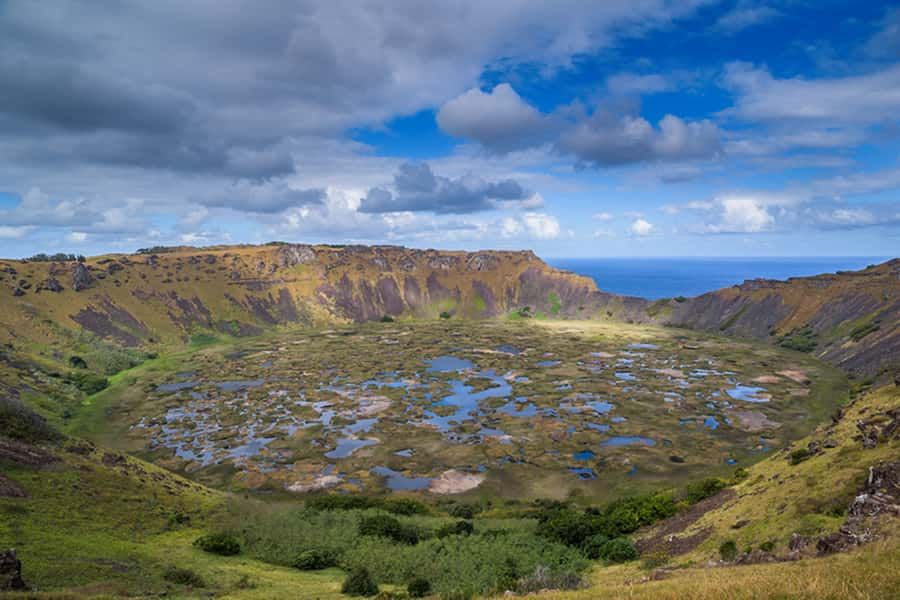
The drive from Ahu Akivi to Rano Kau takes 20 minutes. The guided visit at the crater is scheduled for 15 minutes, followed by a five-minute drive to Orongo.
Rano Kau is a volcanic crater about 1.5 kilometers wide. Inside, it holds the island’s largest reserve of endemic plant life and once supplied drinking water. The view is broad and dramatic, giving you a break from close-up archaeological details.
Fifteen minutes is brief, but the crater is a strong visual stop. Your guide can connect the physical setting with the practical reasons it mattered to people living on the island. Bring a hat and sunscreen, since this is an outdoor outing with limited shelter mentioned in the tour information.
The crater is also a useful lead-in to Orongo. The two sites are close together, but they tell different parts of the island’s story. Rano Kau explains the setting. Orongo explains the ceremony that took place beside it.
Orongo and the Birdman ceremony
Orongo receives the final and longest guided visit after Rano Kau: one hour. The village sits on the rim of Rano Kau and is known for the Birdman ceremony.
The site combines stone structures, views over the crater, and archaeological evidence of an important ceremonial tradition. Your guide can help you understand why this location was chosen and how the ceremony related to status, belief, and competition among communities.
An hour gives Orongo the attention it deserves. It is not just a photo stop. You have time to walk through the village, study the setting, and ask questions about the Birdman tradition and Rapa Nui culture.
The route then returns to Hanga Piko in 15 minutes. Ending at the pier rather than at a restaurant or town meeting point keeps the shore excursion focused on ship logistics. You can head back to the tender area with less rushing at the end of a long day.
What the small group changes
The group limit of eight is one of the strongest reasons to consider this tour. Easter Island sites are spread out, and the schedule requires several vehicle transfers. A smaller group means less time spent loading a bus and less chance of losing the guide in a crowd.
It also makes cultural interpretation more useful. The most praised part of the experience was the guide, Rose, a Polynesian guide who explained history, traditions, language, and local culture. That kind of conversation works better in a small van than on a large coach, where questions can be difficult and explanations may need to stay broad.
The guide is listed as English-speaking. A professional guide and private vehicle are included, along with port pickup and drop-off. The vehicle is described as a private van or small transporter, not a large sightseeing coach.
Small group does not mean slow and leisurely. The schedule is carefully packed. You will cover considerable ground and should be ready to leave each stop when the guide calls the group together.
Price, extra costs, and overall value
The price is $285 per person. The national park entrance ticket costs an additional $80, bringing the known total to $365 per person before any other personal spending.
That is a serious price for a shore excursion, but Easter Island has unusual logistics. You are paying for a private vehicle, a professional English-speaking guide, port transfers, and a route that covers six major sites in one day. You are also buying time, which matters when your ship may only be in port for a limited call.
I see the value most clearly for cruise passengers who want the main sights without arranging several separate taxis or trying to manage the tender schedule alone. The value is weaker if you want a slow beach day, a long lunch, or extended time at only one or two sites.
Bring cash. The tour specifically advises it, and the park ticket is not included. Confirm the current ticket process when booking, since the supplied information gives the cost but not the exact payment procedure.
Comfort, access, and what to pack
This is an outdoor day in a vehicle with repeated stops. Comfortable walking shoes are important, especially at Rano Raraku and Orongo. Sunscreen and a hat are sensible because the tour takes place outside and includes exposed archaeological areas.
Restrooms are available at certain points along the route, but not at every stop. Plan around the facilities when you have the chance.
The tour runs rain or shine. That means your clothing should work in changing weather, and you should not book it expecting an indoor alternative if conditions turn poor.
The tour is described as family-friendly and suitable for all ages. Children who enjoy statues, volcanoes, and stories may find the variety appealing. Still, the packed schedule and walking at archaeological sites may be tiring for very young children.
This is not suitable for wheelchair users, and some sites may be difficult for people with mobility challenges. If you need a fully accessible route, this is not the right choice.
Who should book this Easter Island tour?
I would choose this excursion if you have one cruise day on Rapa Nui and want the broadest possible introduction. It covers the quarry, the best-known coastal ahu, a royal beach, an inland ceremonial site, a crater, and Orongo.
It also suits you if guide interaction matters. Rose’s strong praise for her explanations of local culture, language, traditions, and history suggests that the day is more than a transport service between photo stops.
I would hesitate if you dislike full schedules or want plenty of free time. The itinerary leaves little room for wandering, shopping, a long meal, or an extended swim at Anakena.
The $80 park ticket also needs to be part of your budget. That extra cost is easy to overlook when comparing tours, so calculate the full amount before booking. Free cancellation up to 24 hours before the tour and reserve-now, pay-later terms add flexibility, but they do not change the demanding pace.
FAQ
How long does the Easter Island shore excursion last?
The tour lasts 390 minutes, which is six and a half hours.
Where does the tour begin?
It begins at Hanga Piko, the pier area. The guide waits at the docking area with a sign bearing your name.
Where does the tour end?
The tour returns to Hanga Piko so you can reach the tender area and continue back to your cruise ship.
How many people are in the group?
The group is limited to eight participants.
Which sites are included?
The route includes Rano Raraku, Ahu Tongariki, Anakena, Ahu Akivi, Rano Kau, and Orongo.
Is the national park entrance fee included?
No. The national park ticket costs $80 per person and is not included in the tour price.
What language is the tour offered in?
The live tour guide speaks English.
Is transportation included?
Yes. Port pickup and drop-off, transport in a private vehicle, and a professional guide are included.
Is the tour suitable for wheelchair users?
No. The tour is not suitable for wheelchair users, and some sites have limited accessibility.
What happens if it rains?
The tour takes place rain or shine. Comfortable walking shoes, sunscreen, and a hat are recommended.
Should you book it?
Book this tour if your priority is seeing Easter Island’s major sites in one cruise-friendly day, with a small group and a guide who can explain Rapa Nui culture along the way. The route is busy, the park fee is extra, and the walking is not fully accessible, but the combination of Rano Raraku, Tongariki, Anakena, Ahu Akivi, Rano Kau, and Orongo is hard to match in a single shore outing.
Fresh shore excursions around the world
- Shore Excursion Hobart and Coal River Valley★ 5.0 · 7 reviews
- Private Shore Excursions from Chan May port to My Son Holyland & Hoi An City★ 5.0 · 2 reviews
- Cruise Ship – Port Arthur Shore Excursion – Hobart★ 5.0 · 15 reviews
- Shore Excursion – nipaluna (Hobart) Highlights★ 5.0 · 2 reviews
- Hobart Shore Excursion: Bonorong Bus★ 5.0 · 4 reviews
- Cu Chi Tunnels Private Shore Excursion – From Cruise Port★ 5.0 · 2 reviews
- Private Shore Excursion from Phu My Port: Food & Sights by Motorbike★ 5.0 · 10 reviews
- The Soul of Saigon Shore Excursion from Saigon Port★ 5.0 · 2 reviews
Small Group Shore Excursions, compared.
Ephesus: Small Group Tour for Cruise Passengers
Read our review →
Mykonos Small Group Tour for Cruise Passengers — Port Pickup
Read our review →
Rome Small-Group Shared Tour from Civitavecchia: 8 People Max
Read our review →
Ephesus Small Group – Semi Private Shore Excursion
Read our review →
The Best Santorini Small-Group Shore Excursion for Cruise Ships
Read our review →
Reykjavik: Small Group Golden Circle from Cruise Terminal
Read our review →
6.5 hour Small-Group Rotorua Naturally Shore Excursion – Tauranga
Read our review →
Dunedin Shore Excursion: Small-Group Tour of Dunedin and the Otago Peninsula
Read our review →Browse the lists this tour appears in