
Review · PORTUGAL
Cruise Shore Excursion – Private Tuk Tuk Tour to the Historic Center
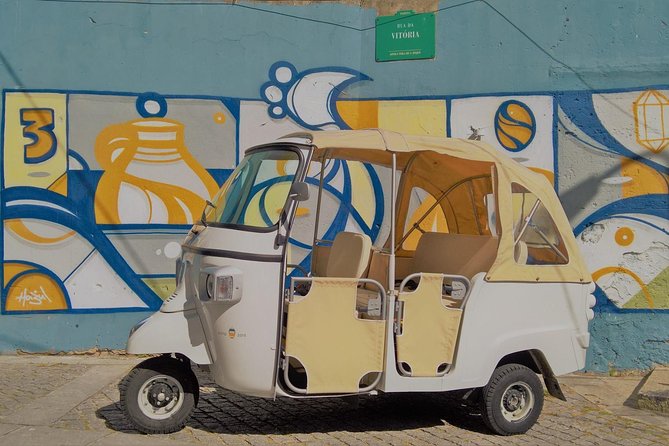
Porto is built for a tuk tuk. Its steep cobbled streets and tight lanes can wear out your legs fast, while the small vehicle slips into corners that defeat a bus. From the Leixões cruise gate, you ride into the city, see the main sights, and get a useful first picture of Porto in about three and a half hours.
I like the easy port pickup and the chance to ask a local guide where to eat, what to see next, and how to spend the rest of your day. I also like the small Port wine tasting at a viewpoint, though it is poured from a bottle into a paper cup rather than served in a wine bar.
The main caution is coordination. Most guides arrive on time, but some bookings have involved late communication, a delayed pickup, or even a shared tuk tuk despite the private booking. Confirm the meeting point and group size before you sail.
Key points to know before you book
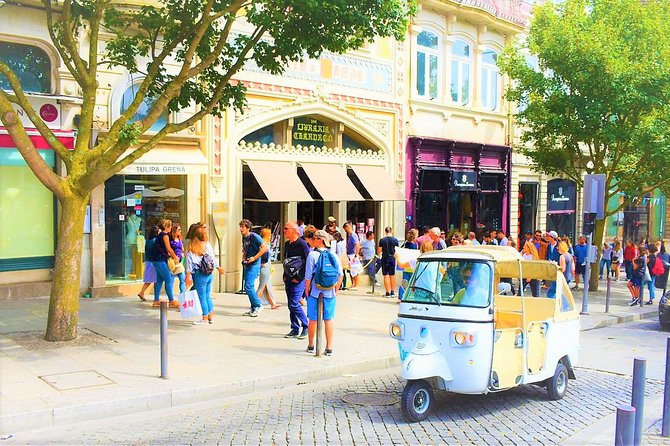
- You start at the cruise port: Pickup is at the outdoor main gate of Leixões Port, Matosinhos Port, or Doca Norte, not inside the ship.
- You cover a lot of ground: The route links Porto viewpoints, churches, markets, bridges, Ribeira, and Vila Nova de Gaia.
- You avoid much uphill walking: The tuk tuk handles Porto’s hills, though cobblestones can make the ride bumpy.
- You get a private guide in theory: Only your group should ride, but one booking reported being combined with another couple.
- You see interiors only if time and tickets allow: Entry fees are not included, and places such as Livraria Lello and the Clérigos Tower need advance planning.
- You receive a Port tasting: Expect a small pour during the tour, often at a lookout rather than at a formal cellar.
Why a tuk tuk makes sense in hilly Porto
Porto rewards walking, but it does not always make walking easy. The historic center climbs and drops without much warning, with polished stone, narrow lanes, and long stairways. A tuk tuk lets you see the city without spending your whole shore day climbing from one landmark to the next.
The vehicle is also small enough to reach places that larger tour buses cannot. Guides can bring you close to viewpoints, churches, and side streets, then give you a few minutes to look around. That makes this a good orientation tour, especially if Porto is your only stop on a cruise.
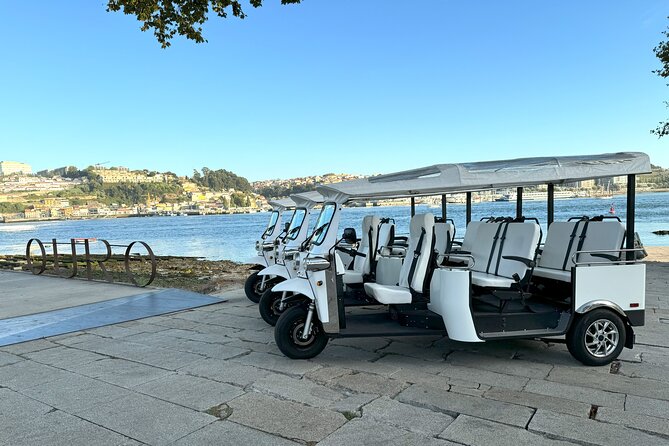
You should expect motion, wind, traffic noise, and a fairly firm ride over cobbles. One passenger found the tuk tuk uncomfortable for three people, and another warned that it may not suit anyone with back problems. The vehicles are best for two people, or for a small group only if the operator confirms a larger vehicle.
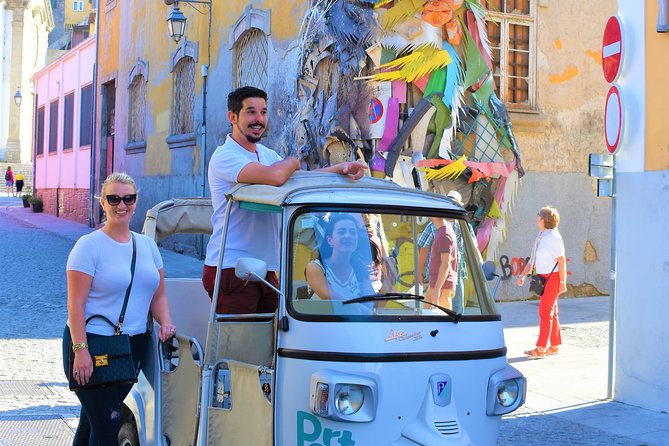
The tour is advertised as private, and that matters. You can ask Ana, Fabio, Gonçalo, Gabriella, or another assigned guide to adjust the emphasis toward churches, views, food, shopping, or port wine. Still, ask in writing how many people will be in your vehicle. A private booking was once overbooked and shared, which is not what you are paying for.
More Private Shore Excursions in Portugal
- Madeira: Private Tour for Cruise Ship Passengers
★ 4.9 · 90 reviews - Shore Excursion Lisbon – Half-day Exclusive Tuk Tour
★ 5.0 · 54 reviews - Private & Customizable Safari 4×4 Half-Day Shore Excursion
★ 5.0 · 40 reviews
From Leixões to Porto’s Atlantic edge
Your day begins outside the cruise terminal gate. The ship docks at Leixões, in Matosinhos, rather than in central Porto, so the first part of the ride gives you a useful transition from port town to city.
The route includes a coastal sculpture designed around the area’s fishing and industrial past. Its three supports resemble smokestacks and lighthouses, while the net-like structure refers to the fishing industry. You may also see a small granite tower with a red balcony and lantern, along with a nearby historic garden containing palms, a fountain, obelisks, a romantic chalet, and a bandstand.
These early sights are not the famous postcard stops, and that is part of their appeal. They give you a sense of the wider Porto area before the old center takes over. The garden also has an unusual public bathroom decorated with Art Nouveau tiles, a detail your guide may point out if the schedule allows.
The Arrábida Bridge follows, carrying six traffic lanes over the Douro. Completed in 1963, it was once the world’s largest concrete arch bridge. You will not spend long here, but the bridge helps explain the city’s geography: Porto and Vila Nova de Gaia face each other across the river, and modern traffic routes sit beside centuries-old waterfront districts.
Passeio das Virtudes and the first big view
Passeio das Virtudes is one of the most rewarding short stops. The lane looks down toward the Douro’s mouth, with terraces descending toward Miragaia and the old customs building along the river.
You get about ten minutes here, enough for photographs and a quick look. This is not a long café break, so use the time well. The view is particularly useful early in the tour because it shows how Porto sits above the river, and why so many later streets feel like ramps.
A guide can also help you spot the Fountain of Virtudes and explain the relationship between the upper city and the riverfront. If you want more time at this viewpoint, ask before the route begins. The itinerary contains many stops, so the guide has to keep moving.
Clerigos, Livraria Lello, and two remarkable churches
The Clérigos district packs several of Porto’s best-known sights into a small area. The baroque Clérigos Tower was designed by Nicolau Nasoni and rises above the center. Climbing its 240 steps is not included in the tour, but the top gives wide views over Porto and the Douro.
The tuk tuk stop is useful even if you do not climb. You can see the tower, learn about its religious and architectural role, and decide if you want to return later. The building also includes a collection connected with the brotherhood and a facility that simulates the climb for visitors who cannot use the stairs.
Nearby, Livraria Lello draws crowds for its Art Nouveau facade, neo-Gothic details, painted wood-effect interior, large stained-glass skylight, and famous red staircase. The visit is not included, and time is tight. If you want to go inside, buy a timed or skip-the-line ticket online in advance. The normal queue can consume the time available for the rest of your shore excursion.
The Fountain of the Lions sits near the university area. It was made in France in the nineteenth century and copies much of a fountain in Leicester, England. It takes only a few minutes to see, but it is an easy detail to miss if you are rushing between the major attractions.
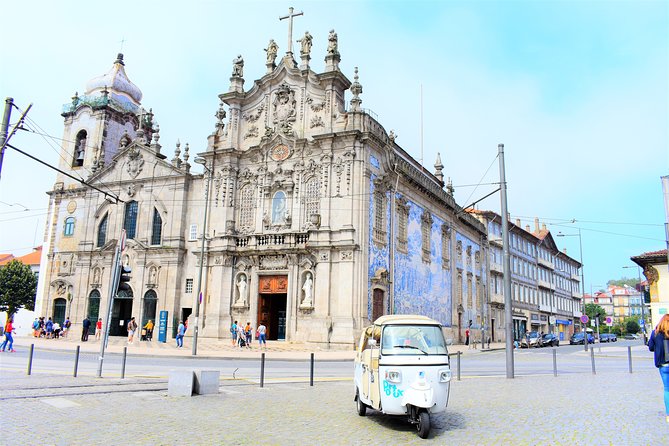
The Carmo Church and the Carmelitas Church are close together, yet they offer different details. Carmo is a fine example of Porto rococo, with an exterior side wall covered in blue-and-white tiles added in 1912. The panels show scenes linked to devotion to Our Lady. The neighboring Carmelitas Church has a classical facade and a Porto rococo altarpiece.
Entry conditions vary. Some stops are exterior visits, while church interiors may require a fee or may be visited only briefly. If ornate interiors are your priority, say so at the start. One guide may spend more time on a church, while another may favor views and neighborhood streets.
More Tuk-Tuk Shore Excursions around Portugal:
- Lisbon: Early Morning TukTuk Tour – hotel/cruise ship pickup
★ 4.9 · 45 reviews - Kochi Sightseeing Tuk-Tuk Tour with Pickup From Cruise Ships
★ 5.0 · 194 reviews - Kochi Tuk-Tuk Sightseeing Tour with Cruise Ship Pickup
★ 5.0 · 190 reviews - Kochi Tuk-Tuk Private Tours with Pickup from Cruise Ships
★ 5.0 · 181 reviews
Cordoaria Garden and the former prison
The Cordoaria Garden, officially Jardim de João Chagas, occupies land once associated with rope makers. It became a public garden in the nineteenth century under the direction of German landscaper Emile David.
The garden includes statues of Portuguese writers, later sculptures by Juan Muñoz, and a work depicting the abduction of Ganymede. It is a pleasant green pause between stone buildings, though the ten-minute stop leaves little time for a slow stroll.
Next comes the former prison building, now the Portuguese Centre for Photography. Built in granite in 1582 and rebuilt in neoclassical style in the eighteenth century, it has 103 windows and several imposing facades. Its past gives the place more weight than a quick exterior photograph suggests. The building once held figures including the writer Camilo Castelo Branco and the bandit Zé do Telhado.
You should treat this as a quick introduction, not a museum visit. Entrance is not included, and the tour’s main purpose is to help you decide which places deserve a longer return visit.
The old center, Bolsa Palace, and São Francisco
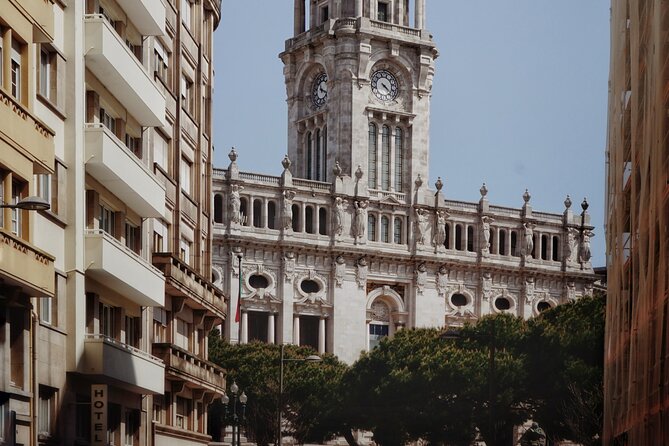
The route then reaches the historic core around the former market area, the Stock Exchange Palace, and the Church of São Francisco. The square once held a market and later became a transport and public space, with a monument honoring Prince Henry the Navigator.
The Palácio da Bolsa is one of Porto’s major interiors. Built in a neoclassical style for the Commercial Association of Porto, it is famous for the Arabian Room. This is a guided monument visit rather than a quick look from the tuk tuk, so admission costs extra and the schedule may not allow entry.
The old iron market building nearby was built in 1885 to replace an earlier riverside market. It later served other uses and now houses an entertainment venue. Its iron structure adds another layer to Porto’s architectural mix, where medieval streets, ornate churches, nineteenth-century markets, and modern cultural spaces share the same few blocks.
The Church of São Francisco is the grand interior stop. Construction began in the fourteenth century, but the church is best known for its lavish gilded woodwork from the seventeenth and eighteenth centuries. The Tree of Jesse and catacombs are key features. Admission is extra, and the visit can take more time than the fifteen-minute stop allows, so ask your guide how the timing will work.
Bridges, Gaia, and the Port wine pause
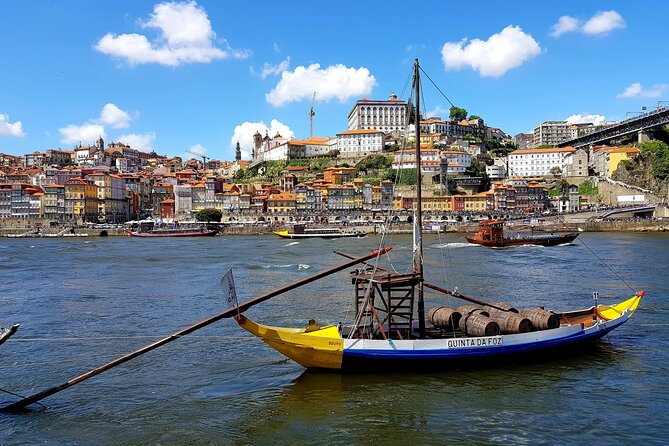
The Dom Luís I Bridge is one of the defining views of Porto. Designed by Teófilo Seyrig, a disciple of Gustave Eiffel, it opened in 1886 with two iron decks. The great arch links Porto with Gaia, and the upper deck now carries Porto’s metro.
The route continues to Ribeira, the old riverfront square. Its colorful buildings, fountain, historic market role, and nightlife make it one of Porto’s essential areas. The tuk tuk cannot enter the square itself because it is closed to vehicles, so you will view it from an appropriate nearby point and walk a short distance if the schedule permits.
On the Gaia side, the Serra do Pilar Monastery provides one of the best high views of both cities. The monastery began in 1538 and includes a circular church and circular cloister with 36 Ionic columns. From the terrace, you can look back toward the Porto Cathedral, Dom Luís I Bridge, the riverfront, and Arrábida Bridge.
The tour includes a Port wine glass, usually a small pour from a bottle carried by the guide and served at a viewpoint. That is a pleasant extra, but do not book this expecting a cellar tour or a formal tasting. If you want to buy a bottle, ask your guide for a recommendation while you are in Gaia.
The Infante Bridge and São João Bridge may also appear along the drive. The Infante Bridge opened in 2003 and replaced traffic on the upper deck of Dom Luís I Bridge. Its high arch gives you another view of how Porto’s bridges have adapted to cars, trains, and metro service.
Batalha, the tiled chapel, and Bolhão
The final urban sights include Praça da Batalha, the São João National Theatre, the Chapel of Souls, and Bolhão Market. Batalha Square has a monument to D. Pedro V and a long civic history tied to the city’s walls and public institutions.
The São João Theatre was built in 1910 after the previous theatre burned. Its facade reflects the Louis XVI style, while the building continues to serve as a major theatre.
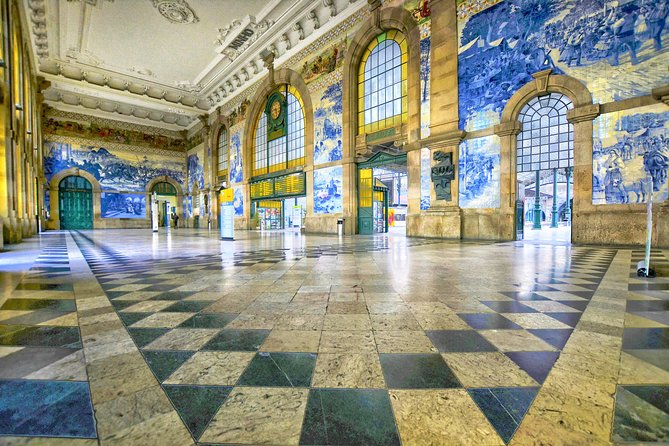
The Chapel of Souls is small but memorable. Its exterior is covered with blue-and-white tiles showing scenes from the lives of Saint Francis of Assisi and Saint Catherine. The panels were restored in 1982, and they offer a fine example of how Porto uses tile as both decoration and storytelling.
Bolhão Market is Porto’s best-known traditional market, with sections for fish, meat, produce, and flowers. At present, it is closed for refurbishment, so do not count on shopping there during this tour. Other market or food stops may be possible if your guide has time, but shopping is not the core purpose of the route.
Price, timing, and what you really receive
At $106.93 per person, this is not the cheapest way to see Porto. The price makes more sense if you are arriving by cruise ship, have only one day, and want a private vehicle, a local guide, and a route that avoids much of the city’s uphill walking.
You are paying for coverage and convenience more than for long visits inside monuments. Entrance fees are not included, and many stops last only five to twenty minutes. If you want to climb Clérigos Tower, enter Livraria Lello, tour the Bolsa Palace, and study São Francisco, you will need extra time beyond this excursion.
The strongest value comes from the guide. The best guides, including Ana, Fabio, Gonçalo, and Gabriella, have been praised for clear explanations, friendly service, local food advice, and flexibility. One guide even provided a sandwich recommendation and directions for walking back toward the port.
The tour usually begins no later than one hour after the ship arrives and runs in the morning. Give the operator your ship name, docking time, disembarkation time, and required return time when booking. Free cancellation is available up to 24 hours before the start, while poor weather may lead to a new date or full refund.
Who should book this Porto shore excursion?
Book it if you want a fast, friendly introduction to Porto and prefer sitting through the hills rather than walking them. It suits first-time visitors, cruise passengers, couples, and anyone who wants views, major landmarks, and local advice before exploring on their own.
Think twice if you need a roomy vehicle, dislike bumpy roads, want extensive shopping, or plan to tour several interiors. Also reconsider if exact pickup communication matters more to you than the sightseeing itself, then confirm every detail well before departure.
My practical call: book this tour when your goal is to see the shape and character of Porto in one shore day. Confirm that the vehicle is truly private, prepare to pay separately for monument entries, and reserve Livraria Lello ahead of time if it is a must. With those limits understood, the tuk tuk is a smart way to cover Porto’s hills, river views, bridges, churches, and Gaia lookout without wasting your cruise day.
FAQ
Where does the tour pick up cruise passengers?
Pickup is offered at the outdoor main gate of Leixões Port, Matosinhos Port, or Doca Norte. The guide does not pick up inside the ship.
How long does the tour last?
The tour lasts approximately 3 hours and 30 minutes.
When does the tour begin after the ship arrives?
The tour starts no later than one hour after the ship arrives.
Is this a private tour?
It is advertised as a private activity for your group only. Because one booking was shared with another couple after an overbooking issue, confirm the vehicle arrangement before departure.
What language is offered?
The tour is offered in English.
Are monument entrance fees included?
No. Entrance fees are not included. This applies to places such as Clérigos Tower, Livraria Lello, Carmo Church, Palácio da Bolsa, and São Francisco Church.
Is Port wine included?
Yes. A Port wine glass is included. It may be served from a bottle at a viewpoint rather than during a formal winery or bar visit.
Can I enter Livraria Lello during the tour?
The tour stops at Livraria Lello, but entry is not included. You should buy a skip-the-line or timed ticket online in advance if you want to go inside.
Is the tuk tuk suitable for people with back problems?
The cobbled roads can make the ride bumpy, and one passenger found the vehicle uncomfortable for three people. Consider this carefully if you have back issues or need extra space.
What happens if bad weather cancels the tour?
If poor weather causes cancellation, you will be offered a different date or a full refund. You can cancel for a full refund up to 24 hours before the experience start time.
More history ashore around Portugal
- Kona Shore Excursion: Sea Turtles, Historic Kona & Coffee
★ 4.5 · 324 reviews - Food Tasty and History Tour in Civitavecchia
★ 5.0 · 256 reviews - Tauranga Shore Excursion: History & Kiwifruit Tasting – 4 Hours
★ 5.0 · 146 reviews - Civitavecchia: Historical and Culinary Walking Tour
★ 4.9 · 61 reviews
Fresh shore excursions around Portugal
- Shore Excursion – Northwest Terraces and Volcanic Pools 4×4 tour★ 5.0 · 3 reviews
- Shore Excursion – Santana & Peaks 4×4 tour★ 5.0 · 4 reviews
- Shore Excursion Santana – Northeast 4×4 tour★ 5.0 · 7 reviews
- Private & Customizable Safari 4×4 Half-Day Shore Excursion★ 5.0 · 40 reviews
- Shore Excursion – East Madeira Peaks & Santana★ 4.0 · 9 reviews
- Shore Excursion Porto Moniz – Enchanted Terraces 4×4 tour★ 4.5 · 9 reviews
- Fatima Private Shore Excursion from Lisbon with Port Pick-Up★ 5.0 · 4 reviews
- Shore Excursions from Ponta Delgada★ 4.7 · 6 reviews
Portugal Shore Excursions, compared.
Benagil Cave Boat Tour – Catamarans or Rib – 2 H From Portimão
Read our review →
Ponta Delgada: Sete Cidades Volcano Lakes Shore Excursion
Read our review →
Shore Excursion Lisbon – Half-day Exclusive Tuk Tour
Read our review →
Azores: Shore Excursion Furnas – Crater volcano and hot springs
Read our review →
Lisbon: Early Morning TukTuk Tour – hotel/cruise ship pickup
Read our review →
Private & Customizable Safari 4×4 Half-Day Shore Excursion
Read our review →
Cruise Travellers : Furnas Volcano & Terra Nostra Thermal Pool
Read our review →Browse the lists this tour appears in