
Review · GERMANY
Rostock: Warnemünde and Rostock Half-Day Shore Trip
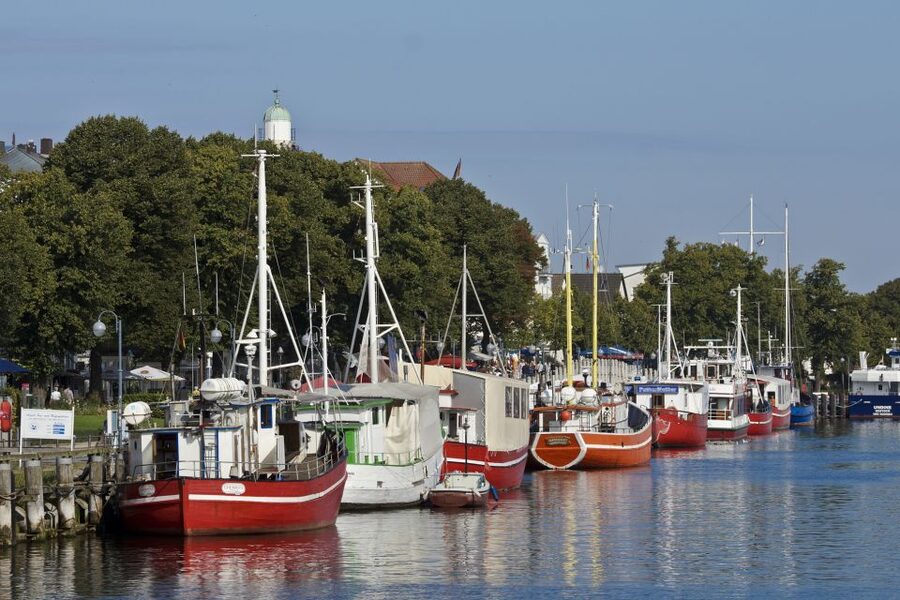
Warnemünde’s Old Stream canal gives this shore trip its best opening: brightly painted fishing boats, old gabled houses, cafés, and a seaside town that still feels tied to the water. Then you ride the same train and tram used by locals to reach Rostock, making the move between port and city part of the experience rather than a simple transfer.
I like the practical two-town design, and I like that your guide handles the public transportation, including German-only announcements. Guides such as Cornelia, Tobias, Yvonne, and Anne have been praised for clear explanations, careful pacing, and personal stories about East Germany. The main drawback is simple: this is a walking tour with cobblestones, and five hours without a planned meal stop may feel long for some people.
Key points to know before you go
- Two very different places in five hours: Begin in the seaside resort of Warnemünde, then continue to historic Rostock.
- Local transport is part of the tour: Your guide leads you by commuter train and tram, with tickets included.
- St. Mary’s Church is a major stop: You’ll see the famous astronomical clock and may time your visit to watch it operate.
- Expect a lot of walking: Plan for cobblestones and periods of 15 to 20 minutes on your feet at a time.
- You get one hour in Rostock: Use it for shopping, a snack, German sausage, or a closer look at the central square.
- Best for independent cruise passengers: The tour costs $81 and offers a smaller, more local alternative to a long coach trip to Berlin.
Why this Warnemünde and Rostock combination works
A port day in Warnemünde gives you a choice. You can stay close to the ship and explore the seaside town at an easy pace, or spend much of the day chasing a distant destination such as Berlin. This five-hour tour takes a more sensible middle path.
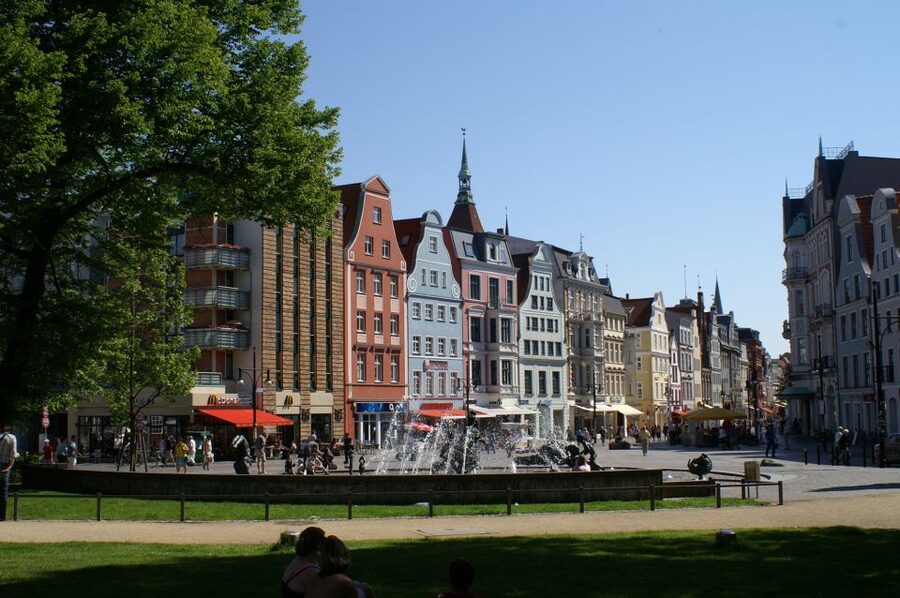
You see Warnemünde properly, then add Rostock, the largest city in Mecklenburg. The result is a useful contrast. Warnemünde is compact, maritime, and low-rise. Rostock is an old Hanseatic university city with churches, market squares, town walls, and a larger urban center.
I especially like that the tour does not hide the transportation. The train and tram ride takes about 30 minutes each way, and those rides show you how the region works beyond the cruise terminal. Your guide stays with the group, helps everyone board, and keeps the journey organized so nobody is left behind.
The maximum group size is 20, though several outings had around 9 or 10 people. A smaller group makes it easier to hear the guide, ask questions, and keep a steady pace through the streets.
More half days ashore around Germany:
- Flam: The Wonders of Flam Guided Half-Day Shore Excursion
★ 4.8 · 668 reviews - Skagway Shore Excursion: Half-Day Tour to the Yukon Border and Suspension Bridge
★ 5.0 · 543 reviews - St Maarten Shore Excursion: Orient and Maho Beach Half-Day Tour
★ 4.5 · 486 reviews
Starting at the cruise berth in Warnemünde
Your guide meets you at the ship’s berth at Am Passagierkai 6, holding a sign with the tour name. That detail matters in a cruise port, where a default map pin may not match your actual ship. You do not need to search for an office in town.
The excursion includes pickup and return to the cruise port, along with public train and tram tickets. Food and drinks are not included, so bring some money for a snack or plan to use the free hour in Rostock for food.
Wear shoes that can handle uneven paving. The tour is not suited to wheelchair users, and it is a poor choice if you cannot walk for 15 to 20 minutes at a time. One participant described the walking as several miles, much of it on cobblestones, so the basic warning should be taken seriously.
Warnemünde’s fishing boats and Old Stream canal
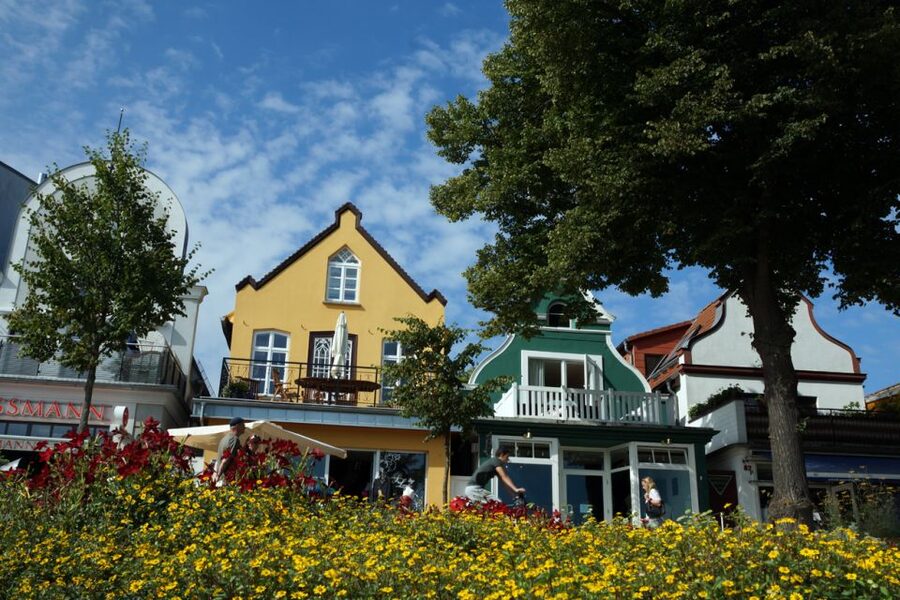
The first guided section lasts about an hour. Warnemünde began as a fishing village, and the historic center still shows that origin in its narrow streets and old houses.
You’ll see typical 18th- and 19th-century buildings with gabled fronts, half-timbered details, and ornamental doors. These are not grand palace façades. Their appeal is domestic and practical, giving you a sense of how a working coastal town developed before modern tourism took over.
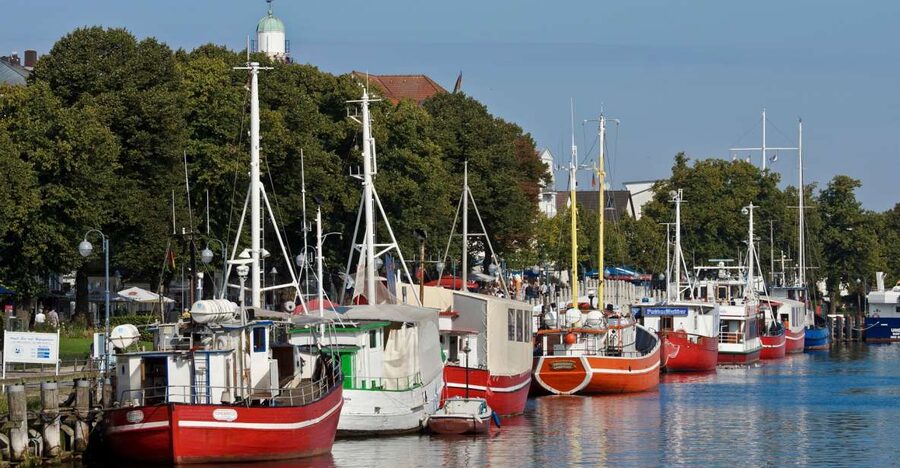
The most memorable stretch is the Old Stream canal. Brightly painted fishing boats sit along the water, with cafés and small shops close by. It is an easy place to understand the town’s character: part harbor, part resort, and still connected to fishing.
Your guide provides the context that a quick solo walk might miss. You can then decide if you want to return after the formal tour for a fish sandwich, cake, boutique shopping, or more time by the waterfront. That flexibility is one of the better features of the schedule. The tour introduces Warnemünde without using the entire day there.
Still, the one-hour visit is an introduction rather than a full seaside outing. If your main goal is a beach walk, extended shopping, or a relaxed café morning, you may wish the Warnemünde portion were longer. The tour is designed to share the day with Rostock.
Riding the commuter train and tram to Rostock
After Warnemünde, you travel to Rostock by public transportation. The train portion is listed at about 30 minutes, and the tram is part of the local route into the city.
This is not a sightseeing railway with reserved seats or a narrated panorama. It is ordinary transportation, which is exactly why it has value. You see how the port connects to the city and get a small lesson in German travel habits along the way.
The guide makes the difference. German-only announcements can be confusing if you are watching for the right stop, especially while keeping track of a group. Guides such as Tobias and Andreas have been praised for timing the connections well, while several guides were noted for making sure no one became separated.
There is a practical tradeoff. Public transport can involve standing, platform changes, and a little waiting. It also means the tour depends on keeping to schedule. In exchange, you avoid the feel of a large coach excursion and travel in the same way local residents do.
Same port, a different plan for the day:
- All-in-One Berlin Shore Excursion from Warnemunde
★ 4.5 · 293 reviews - Best Berlin Shore Excursion from Warnemunde or Rostock Port
★ 4.8 · 200 reviews - Warnemünde: Guided Walking Tour
★ 4.3 · 102 reviews - Deluxe Berlin: Hassle-Free Shore Tour from Warnemunde Cruise Port
★ 4.5 · 82 reviews
Rostock’s Hanseatic center and St. Mary’s Church
Rostock receives about an hour and a half of guided sightseeing, followed by roughly an hour of free time. That gives the city the larger share of the tour, and rightly so. Its center contains a strong collection of medieval and later landmarks within walking distance of one another.
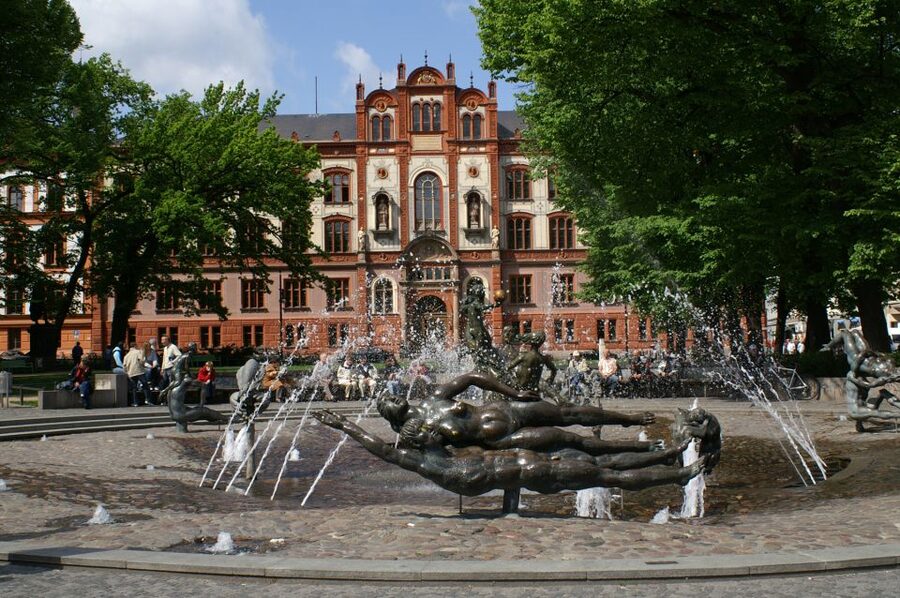
The city grew as a Hanseatic trading center and university town. Your guide may point out the town hall, university, medieval town wall, market squares, and the Monastery of the Holy Cross. The emphasis is on how Rostock developed and how it changed, including the experience of East Germany.
That modern historical context adds something unusual. Several guides have shared personal knowledge of life in East Germany, and this can turn a standard old-town walk into a broader explanation of how the city looked and functioned in recent decades. Guides have also used old photographs to show how places changed over time.
St. Mary’s Church is the central indoor stop. The entrance fee is included, and you’ll have a chance to look inside rather than simply admire the exterior. The astronomical clock is the star attraction.
Try to see when the clock operates. The timing can make the visit more rewarding, since you are not only looking at an old object but watching its moving figures and mechanisms in action. One guide was praised for arranging the visit so the group witnessed the clock operation.
The church also gives you a break from the street, though it is not a long rest period. If church interiors are not your interest, the stop may feel slower than the market squares and lanes outside. For many people, though, it is the most distinctive sight in Rostock.
One hour to shop, snack, or explore at your own pace
The final Rostock section gives you about an hour of free time in the center. This is enough for a focused choice, not enough for everything.
You might browse shops, find a German sausage, stop for a drink, or revisit a square that caught your attention during the guided walk. One participant specifically enjoyed trying German sausage, and another wished for more shopping time. Both reactions make sense: an hour feels generous if you want a quick snack, but short if you plan to browse several stores.
I recommend deciding in advance what matters most. If you want food, do not spend the entire hour wandering first. If you want shopping, stay near the central area and keep an eye on the time. The guide will need to gather everyone for the return trip.
This free period is important because the guided portion is information-heavy. You get a chance to absorb the city on your own rather than listening continuously for five hours. Still, one clear weakness is the lack of a scheduled coffee or restroom break halfway through. A few people found five hours without a planned pause too demanding, especially older participants.
You can ask your guide about stopping when needed, but do not assume a formal café break is built into the plan. Bring water and use restrooms when the opportunity appears.
Returning by public transportation
The return to Warnemünde takes about 30 minutes by train, according to the schedule. Your guide again handles the route and keeps the group together.
This final ride is less about sightseeing and more about getting back safely and on time. For a cruise passenger, that reliability matters. The tour returns to the same cruise port where you started, rather than leaving you to find your own way back after free time in Rostock.
Allow yourself enough energy for the return walk and station movement. Even if the guided sightseeing is finished, the day is not a seated excursion. Comfortable shoes and a moderate pace are essential.
Guide quality and group experience
The strongest pattern across the feedback is the quality of the English-speaking guides. Cornelia was praised for helping people navigate like locals. Tobias was repeatedly described as well prepared, clear, and attentive. Yvonne was noted for her warmth and ability to explain the area, while Anne was praised for being caring and easy to follow.
Those details matter because this tour depends on interpretation. Warnemünde and Rostock are pleasant places to walk through on your own, but the church, medieval buildings, East German background, and local transportation become more meaningful when someone connects the pieces.
The guide also controls the pace. Some outings moved comfortably, with regular chances for restrooms, food, and shopping. One older group felt the guide needed to slow down. If you walk slowly, tell the guide early. The group size of up to 20 can make individual pacing harder, although smaller groups may be available on a particular date.
English is the only offered language. The guides have generally been described as clear speakers, but the amount of historical explanation may not suit children or anyone looking mainly for free time.
Is $81 a fair price?
At $81 per person, the tour is not the cheapest way to walk around Warnemünde. You could explore the port town independently and pay only for local transportation to Rostock. But that comparison misses the main value.
The fee includes a guide for both towns, train and tram tickets, pickup and return at the ship, and entry to St. Mary’s Church. You also avoid working out the route yourself, interpreting German transport announcements, and watching the clock while changing between Warnemünde and Rostock.
For a first visit, I consider the price reasonable, particularly if you want both towns in one port day. The value is strongest for people who would otherwise book a larger cruise excursion or feel uneasy using local transportation.
The value is weaker if you want a relaxed beach day, long shopping time, or a food-focused outing. You are paying for coverage and guidance, not a slow afternoon. At five hours, the tour packs in a lot, and the walking is part of the bargain.
Free cancellation up to 24 hours before departure and reserve-now, pay-later terms add useful flexibility, particularly when cruise schedules can change. Check the available start time against your ship’s port schedule before booking.
Who should book this shore trip?
I would choose this tour if you want a first look at both Warnemünde and Rostock, enjoy local history, and are comfortable walking on uneven streets. It is also a good choice if public transportation in a foreign language makes you nervous.
You’ll get the most from it if you like hearing about medieval cities, Hanseatic trade, St. Mary’s Church, and the recent history of East Germany. The guides tend to be at their best when explaining how the places changed over time.
Think twice if you use a wheelchair, need a walker, tire quickly, or dislike cobblestones. You should also consider a shorter independent visit if coffee, lunch, and shopping matter more to you than seeing two towns in one morning and afternoon.
My verdict
I would book this tour for a single cruise stop when my goal was to understand the area rather than simply collect a few photographs. Warnemünde’s boats and old houses provide the charm, Rostock supplies the history, and the train and tram ride tie the two together in a practical way.
The main caution is stamina. Bring comfortable shoes, water, and realistic expectations about the one-hour free period. If you can manage the walking and want a well-organized introduction to northern Germany, $81 buys a useful, personal-feeling day with access to sights you might otherwise miss.
FAQ
Where does the tour meet?
The guide meets you at your cruise ship’s berth at Am Passagierkai 6 in Warnemünde. Look for a guide holding a sign with the tour name.
How long does the shore trip last?
The experience lasts five hours, including the guided walks, public train and tram rides, Rostock sightseeing, and free time.
Is transportation included?
Yes. Tickets for the public train and tram are included, and the guide accompanies the group during the journey to and from Rostock.
What language is the tour offered in?
The tour is offered in English with a live English-speaking guide. No other languages are available.
How much walking is involved?
This is a walking tour, and you should be able to walk for 15 to 20 minutes at a time. Expect cobblestone streets and a substantial amount of walking during the five-hour outing.
Is food included?
No. Food and drinks are not included. You have about one hour of free time in Rostock to find a snack or drink, and you may return to Warnemünde afterward for local food such as a fish sandwich.
Fresh shore excursions around Germany
- Hamburg Shore Excursion: Private Berlin Day Trip★ 5.0 · 6 reviews
- Warnemuende Shore Excursion: Berlin Private Sightseeing Tour from Rostock★ 5.0 · 4 reviews
- Warnemuende Shore Excursion: Private Berlin Tour★ 4.5 · 27 reviews
- Deluxe Berlin Tour from Warnemunde or Rostock Cruise Port★ 4.5 · 11 reviews
- Group Driving Tour 1 to 6 people. Berlin Shore Excursion incl pick-up at Port★ 5.0 · 8 reviews
- Semi-Private Berlin Highlights Shore Excursion from Warnemünde and Rostock Port★ 5.0 · 6 reviews
- Private All-in-One Berlin Shore Excursion from Warnemünde Port★ 5.0 · 35 reviews
- Full Day Tour of Berlin from Warnemunde and Rostock Cruise Port★ 4.5 · 8 reviews
Germany Shore Excursions, compared.
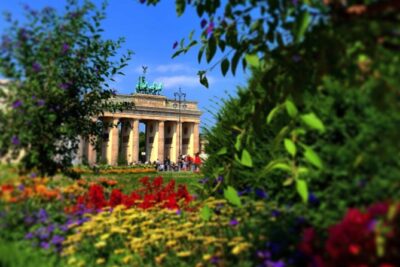
All-in-One Berlin Shore Excursion from Warnemunde
Read our review →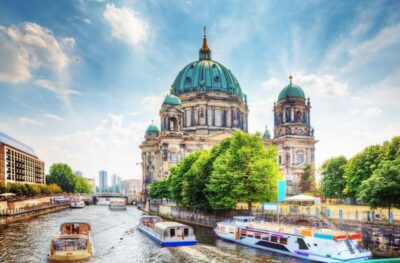
Best Berlin Shore Excursion from Warnemunde or Rostock Port
Read our review →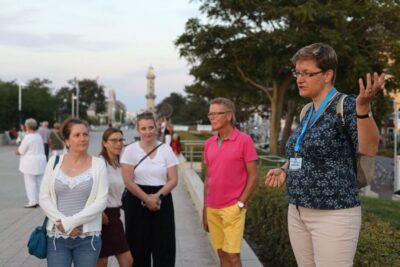

Deluxe Berlin: Hassle-Free Shore Tour from Warnemunde Cruise Port
Read our review →
Berlin & Sachsenhausen Concentration Camp Tour from Warnemünde and Rostock Port
Read our review →
Explore Berlin Shore Excursion: Top Attractions Private Tour from Warnemuende
Read our review →
Berlin and Sachsenhausen: Shore Trip from Warnemünde Port
Read our review →
Private All-in-One Berlin Shore Excursion from Warnemünde Port
Read our review →Browse the lists this tour appears in