
Review · CANADA
Quebec City Shore Excursion: Grand Walking Tour of Quebec City
Quebec City makes its story easy to read on foot. In two hours, you walk from the Upper Town fortifications down through Old Québec to Place Royale and the Lower Town, passing the Château Frontenac, Notre-Dame sites, old gates, and streets tied to the birth of French America.
I like the downhill route, which saves your legs, and the small maximum group of 15, which makes it easier to hear and ask questions. Guides such as Yves, Paul, Jocelyne, Helene, and Anne are praised for mixing history with humor, personal stories, food tips, and a good sense of pace.
The main catch is that this is an outdoor overview, not an interiors tour. You may see churches and major buildings from outside without going in, and construction or street performers can make a guide harder to hear.
Key points to know before you book
- The route runs downhill: You begin in Upper Town and finish near the Old Quebec Funicular in Lower Town.
- You cover the essential sights: Expect the fortifications, original gates, Château Frontenac, Place Royale, Notre-Dame-des-Victoires Church, and Old Québec streets.
- The guide makes the difference: Local guides including Yves, Paul, Jocelyne, Helene, and Anne have been praised for humor, history, and personal stories.
- The tour stays outdoors: Building entry is not promised, including at Notre-Dame sites.
- The group is capped at 15: That is a useful size for a walking tour, though street noise can still affect what you hear.
- The finish is convenient: The route ends about five minutes from the cruise terminal, near the Old Quebec Funicular.
A smart first look at Quebec City from the ship
At $27.78 per person, this is priced as an affordable introduction rather than a full-day historical program. You are paying for a licensed guide, local taxes, and a focused walk through the city’s oldest districts. There is no port pickup, no vehicle, and no admission to buildings included.
That can be a good deal on a cruise stop. Quebec City’s old center is compact but packed with layers of military, religious, political, and commercial history. A guide helps you connect the stone walls, steep streets, churches, and squares instead of simply taking photographs and moving on.
I especially like this tour for a first visit. It gives you a map in your head. Afterward, you can decide where to return for a longer look, a meal, shopping, or a self-guided visit.
The advertised duration is about two hours. In practice, guides may run longer, sometimes closer to two and a half hours, especially when the group asks questions. Build some flexibility into your day, but do not count on a long extension if you have a tight ship schedule.
More walks from the pier around Canada:
- Livorno: Florence Optional Walking Tour and Accademia Entry
★ 4.3 · 671 reviews - Juneau Shore Excursion: Helicopter Tour and Guided Icefield Walk
★ 5.0 · 536 reviews - Sydney Shore Excursion: Sydney Opera House Walking Tour
★ 4.5 · 160 reviews
Meeting in Upper Town near Rue Sainte-Anne
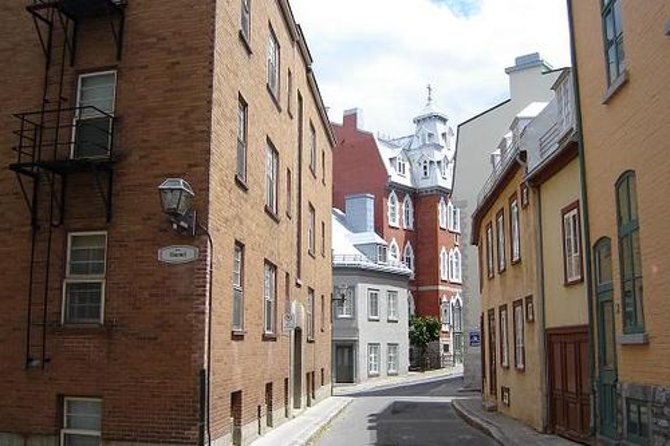
The tour begins at 12 Rue Sainte-Anne in Upper Town. The meeting point is described as less than a 10-minute walk from the cruise port, but allow extra time. One cruise passenger found the walk from the port longer than expected and arrived late, so I would not leave the ship at the last possible minute.
The start puts you close to the historic core right away. You meet the guide and group, then begin with Quebec City’s story from 1608 to the present. That broad time span matters. This is not only a parade of old buildings. The guide explains how the city developed, why its defenses mattered, and how French Canadian culture continues today.
The route begins in Haute-Ville, or Upper Town. It is the higher part of the old city and the natural place to discuss military power, government, religion, and the fortified settlement. Starting here also gives the walk a helpful direction: you gradually head downhill toward the riverfront districts.
The route is not described as strenuous, but you should have a moderate level of fitness. You will be on your feet for roughly two hours, and Old Québec includes uneven streets, slopes, and busy public areas. Wear shoes with a firm grip and bring clothing for the forecast. The tour operates in all weather.
Fortifications and the original gates
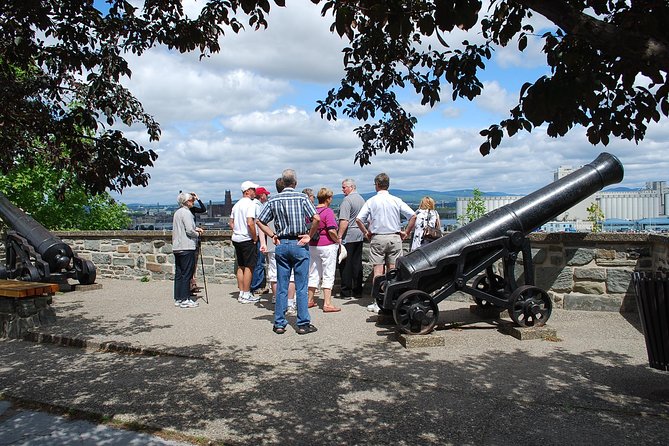
One of the strongest parts of the walk is the look at Quebec City’s walls and gates. Quebec City is the only walled city north of Mexico, and the fortifications are not just decorative scenery. They help explain why this location mattered so much to European powers in North America.
Your guide discusses the defensive system and the role of the walls in protecting the city. You see original gates and learn how access through a fortified city was controlled. This is the kind of detail that gives purpose to the architecture. Instead of seeing a wall as a pleasant old backdrop, you understand it as part of a working military system.
The nearby Citadelle adds another layer. It remains an active military installation and is also an official residence of the Canadian monarch and the Governor General of Canada. The walking tour gives you context about that role, though you should not expect a separate Citadelle visit or admission during this short route.
This section will appeal to you if you like history explained through places. It is less suited to anyone hoping for a long stop inside a fort or museum. The focus is on commentary while moving through the city.
Château Frontenac and the Upper Town views
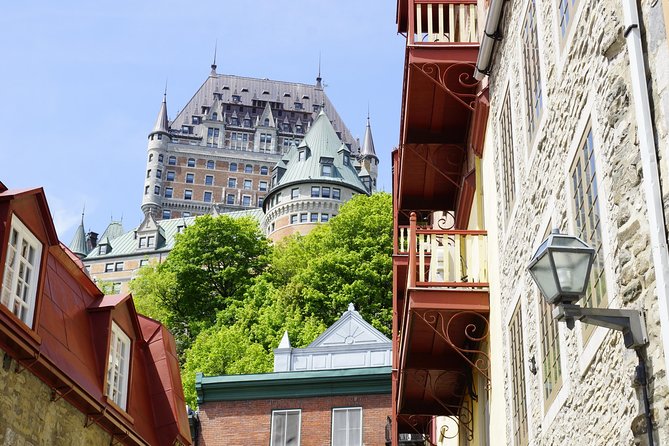
The Château Frontenac is one of Quebec City’s defining sights, and the tour includes time to appreciate it. Its grand appearance gives the walk a strong visual anchor, especially for first-time visitors.
The guide uses the château and its setting to explain Quebec City’s public image and its long role as a center of power and hospitality. You get time to look, take photographs, and hear the stories tied to the area, but this is not a hotel tour. You should plan on seeing it from the outside unless your guide says otherwise.
That distinction runs through the entire experience. This is a moving city walk, so the value comes from the connection between stops. You learn while crossing streets and squares, then pause at important points. The approach keeps the tour from feeling like a long lecture in one place, though it also means you may want to return later for a slower visit.
Several guides have been praised for keeping the talk lively. Yves is described as good-humored, while Paul is noted for being funny and well informed. Anne, Helene, and Jocelyne also receive praise for friendly delivery and strong local knowledge. Your guide will vary, so treat those names as examples of the style you may encounter, not a promise of a particular leader.
More shore excursions around Canada:
- Pedicab Tour of Victoria from Cruise Ship Terminal
★ 5.0 · 436 reviews - Vancouver: Cruise Terminal Luggage Storage for 2 Bags
★ 4.5 · 178 reviews - Shore Excursion: Post-Cruise Vancouver City Sightseeing Tour with Port Pick Up
★ 4.5 · 155 reviews - Shore Excursion: Pre-Cruise Vancouver City Sightseeing Tour with Port Drop Off
★ 4.5 · 139 reviews
Place Royale, where the city’s story narrows
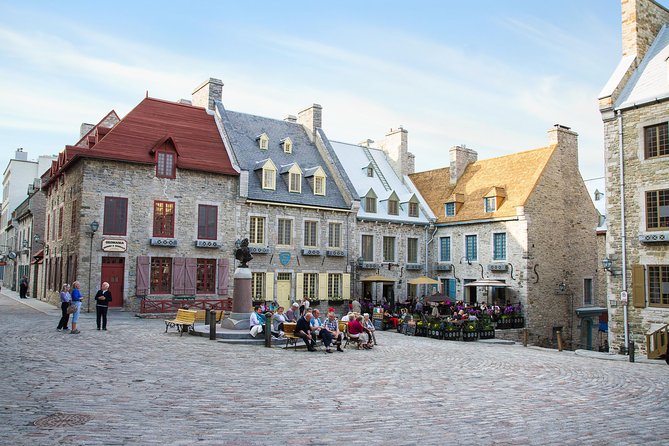
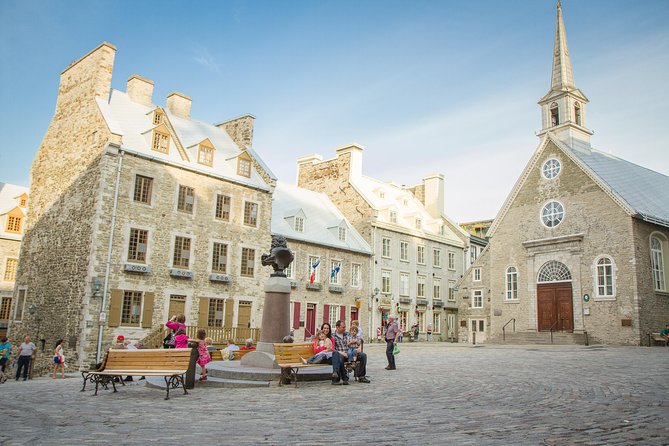
The route continues downhill toward Place Royale. This square is often called the birthplace of French America, and it is one of the most atmospheric places on the walk. Here, the city feels more intimate, with older stone buildings and a street pattern that invites you to slow down.
The guide explains the traditions and events connected with Old Québec while pointing out the architecture around the square. You get a sense of how the city’s public life developed, rather than simply hearing a date or a name.
Notre-Dame-des-Victoires Church is located at the spot where Quebec began and is one of Canada’s oldest stone churches. The tour includes the church among its important sights, but entry is not guaranteed. That is worth stressing because one person booked the walk expecting to go inside Notre-Dame and felt disappointed when the tour remained outdoors.
The same applies to the Basilica Notre-Dame and other major churches mentioned in the route. You can learn about their place in the city and see their exteriors, but this experience does not include a dependable interior visit. If church interiors are your main goal, you will need to set aside separate time.
Lower Town, shopping streets, and the Old Quebec Funicular
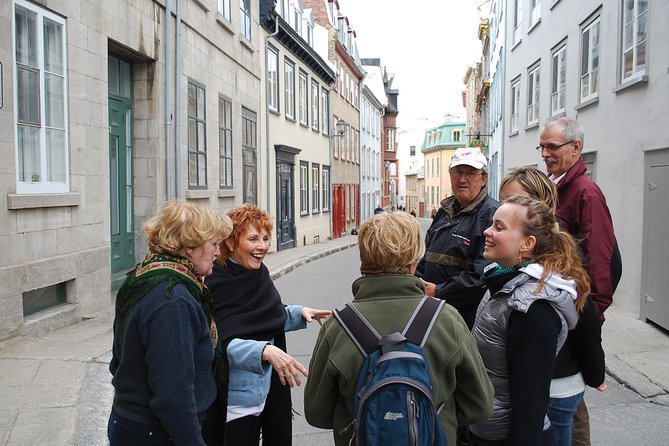
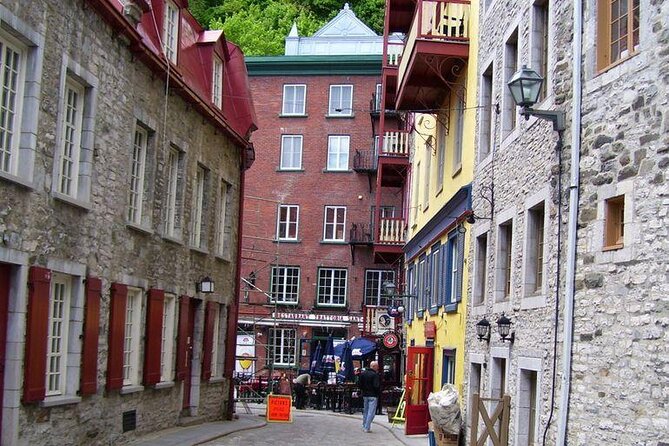
As you continue down, the character of the city changes. Lower Town brings narrower streets, shops, restaurants, and a closer sense of the old commercial district. The guide may point out places to eat and local activities, which is particularly useful if this is your first few hours in Quebec City.
Jocelyne has been praised for sharing information about current events, dining, and things to do, along with family stories reaching back through Quebec’s past. That kind of advice can be more useful than a standard list of landmarks. You can leave the tour with a better idea of where to spend the rest of your port day.
The finish is near the Old Quebec Funicular at 16 Rue du Petit Champlain. It is about a five-minute walk to the cruise terminal, which makes the ending practical. You can continue exploring Lower Town, use the funicular if needed, or walk back to the ship.
The funicular itself is a useful landmark, even if riding it is not part of the tour. The walk ends in a spot where you can make your next choice without retracing the entire route uphill.
What the two hours feel like
This is an active walking tour, but the pace is described as manageable. The guide stops to explain key locations, then moves the group onward. Several guides are praised for controlling the pace well, speaking clearly, and answering questions.
You should expect plenty of standing and walking, not a long series of formal admissions. One person felt there was too much talking and not enough entering or seeing new places. That criticism points to the central choice here: you are buying interpretation more than access.
Construction noise and street performers can affect the sound. Guides may need to repeat themselves or project their voices, and a portable microphone would sometimes help. Stay near the guide, especially in crowded or noisy sections, and ask for clarification if you miss a point.
The group maximum of 15 is a real benefit. It is far more personal than a large coach tour, and it gives you a fair chance to ask a question. Still, a smaller group cannot remove the noise of a working city.
The guide’s role is the heart of the experience
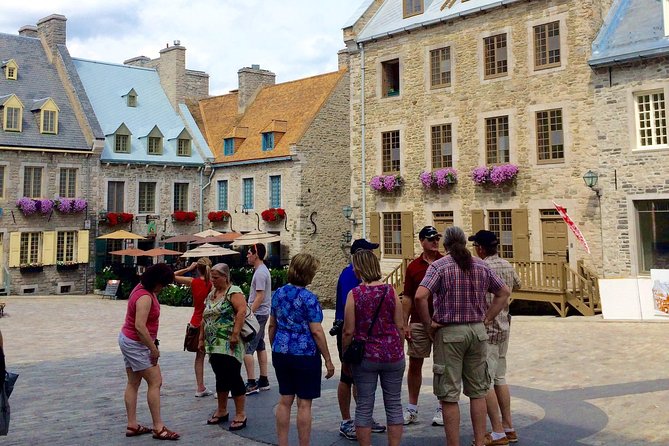
The route is strong, but the guide shapes the day. The best version of this tour mixes dates and battles with architecture, folklore, food, family stories, and ordinary life in Quebec City.
The praise for guides is unusually consistent in its details. People highlight humor, clear explanations, personal stories, and a lack of dull stretches. Paul is noted for combining comedy with history. Jocelyne has used photographs and stories from her life in the city. Helene is described as friendly and especially helpful for a first visit.
You may get a guide who focuses more on military history, another who spends more time on architecture, or someone who gives extra restaurant advice. That variation is part of the charm, though it also means the exact balance of the walk cannot be guaranteed.
I would book this early in your stay if you are spending more than one day in Quebec City. The route helps you decide which sites deserve a return visit. On a cruise stop, it also gives you a useful overview without taking the whole day.
Who should book this walk
I would choose this tour if you want:
- A low-cost introduction to Old Québec
- A guide to connect major sights with history
- A downhill route through Upper and Lower Town
- A small group rather than a coach excursion
- A finish close to the cruise terminal
- Restaurant and activity suggestions for later
I would think twice if you need guaranteed access inside churches, the Citadelle, or the Château Frontenac. I would also choose another format if walking for two hours, handling slopes, or keeping up in poor weather would be difficult.
The tour suits first-time visitors, couples, families with older children, solo visitors, and cruise passengers who want more context than a quick independent stroll. It is also a good fit for anyone who enjoys stories and architecture more than checking off indoor attractions.
Is the Quebec City Grand Walking Tour worth $27.78?
For the price, I find the value strong. You get a licensed local guide, a route through both main sections of Old Québec, and an efficient look at landmarks that would take longer to understand on your own.
The value depends on your expectations. If you see the walk as a guided orientation, $27.78 is reasonable. If you expect entry into Notre-Dame, a full Citadelle visit, or extended time inside historic buildings, you may feel shortchanged.
Book it if you want history, humor, and a practical first look at the city. Arrive early, wear good shoes, stay close enough to hear, and leave time after the tour for Lower Town. Skip it only if guaranteed indoor access or a private, slower experience matters more than an affordable overview.
FAQ
How long is the Quebec City walking tour?
The advertised duration is approximately two hours. Guides may sometimes continue longer, with some tours lasting closer to two and a half hours.
Where does the tour start?
The meeting point is 12 Rue Sainte-Anne in Quebec City’s Upper Town.
Where does the tour end?
The tour ends near the Old Quebec Funicular at 16 Rue du Petit Champlain in Lower Town. The end point is approximately a five-minute walk from the cruise terminal.
Is port pickup included?
No. Port pickup and drop-off are not included. You walk to the meeting point.
How far is the meeting point from the cruise port?
The meeting point is described as less than a 10-minute walk from the cruise port. Allow extra time because the walk may take longer depending on your ship’s berth and route through the port area.
Does the tour enter the churches or other buildings?
Building entry is not guaranteed. The route includes sights such as Notre-Dame-des-Victoires Church and the Basilica Notre-Dame, but you may view them from outside.
What size is the tour group?
The tour has a maximum of 15 participants.
What happens if my ship is delayed?
The experience includes a worry-free shore excursion policy. If a ship delay prevents you from attending, your money will be refunded under the stated terms. Free cancellation is also available up to 24 hours before the start time.
Fresh shore excursions around Canada
- Halifax Private Shore Excursion★ 5.0 · 9 reviews
- Halifax Shore Excursion: Halifax on Foot★ 3.0 · 3 reviews
- Halifax Shore Excursion: Peggy’s Cove Half Day Tour★ 3.0 · 14 reviews
- Cruise Ship Shore Excursion★ 4.5 · 8 reviews
- Shore Excursion: Charlottetown Highlights & Delights★ 3.0 · 2 reviews
- Private Shore Excursion UTV/ATV Side-by-Side Trail Tour★ 3.5 · 3 reviews
- Cabot Trail Jeep Adventure – Cruise Excursion★ 5.0 · 5 reviews
- Shared Cruise Excursion – “Mini” Cabot Trail★ 4.5 · 58 reviews
Canada Shore Excursions, compared.
Pedicab Tour of Victoria from Cruise Ship Terminal
Read our review →
Shore Excursion: Post-Cruise Vancouver City Sightseeing Tour with Port Pick Up
Read our review →
Shore Excursion: Pre-Cruise Vancouver City Sightseeing Tour with Port Drop Off
Read our review →
Post-Cruise Shore Excursion: Capilano Suspension Bridge & Grouse Mountain
Read our review →
From Saint John: Bay of Fundy Bus Trip for Cruise Passengers
Read our review →

Niagara Falls Scenic Day Tour from Toronto Airport Pickup
Read our review →Browse the lists this tour appears in