
Review · POMPEII & AMALFI COAST
From Naples: Pompeii Shore Excursion for Cruisers with Guide
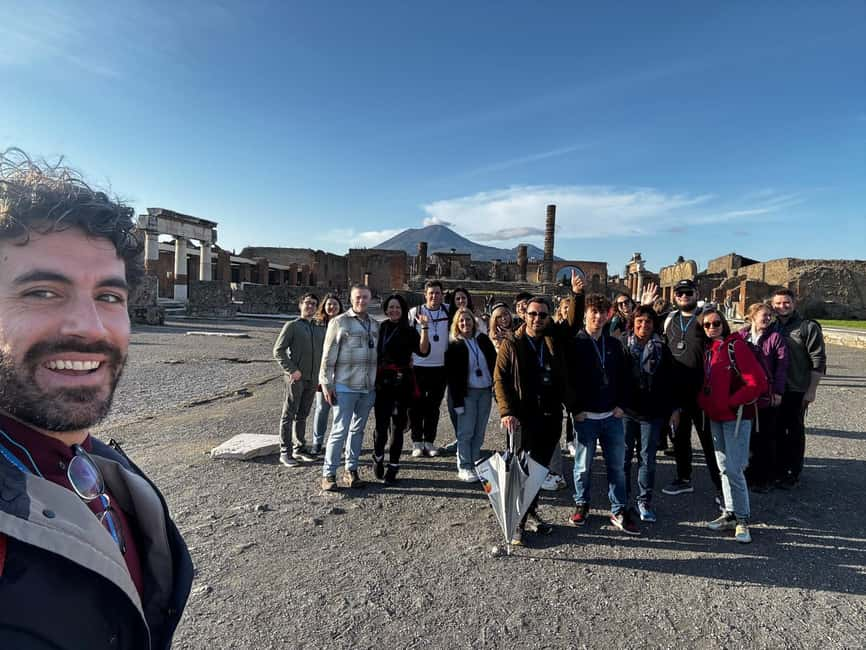
Pompeii is not a tidy set of ruins behind glass. It is a large Roman city where you walk along ancient streets, peer into homes, and come face to face with plaster casts made from people caught by the eruption. This tour gives you a real archaeologist to make sense of it all, with Carlo and Rosa among the guides praised for clear, lively explanations.
I like the skip-the-line entry and the practical cruise-port transfer. You get a luxury, air-conditioned coach from Naples, then a focused 2.5-hour walk through the Forum, villas, baths, theatre, and more. The main caution is the pace and footing: Pompeii is huge, the ground can be uneven, and this is not suitable for wheelchair users.
Key points to know before booking
- A guide who works in archaeology: Expect live commentary in English, Italian, or Spanish, with guides such as Carlo and Rosa leading the walk.
- A strong cruise-day setup: Pickup and drop-off are available at Molo Beverello or Piazza Esedra when you choose the Naples option.
- The most important Pompeii sights in one route: The Forum, House of the Faun, House of the Vettii, theatre, temples, baths, thermopolium, and plaster casts all appear on the visit.
- Entry and headsets are included: You do not need to arrange your own Pompeii ticket, and headsets help you follow the guide.
- Allow extra time around the 2.5-hour visit: The full activity is listed as 2.5 to 5 hours, depending on the starting option and transfer arrangements.
- Wear proper walking shoes: Bring water and a camera, and expect a long outdoor visit with no food or drinks included.
Why an archaeologist changes the Pompeii visit
Pompeii can overwhelm you. The site covers a large area, and without context, a wall is just a wall, a column is just a column, and a half-preserved room can be easy to overlook.
A professional archaeologist helps connect those fragments. You learn how Roman public life worked, where legal business took place, how people ate, and what private homes revealed about wealth and status. That matters here because Pompeii rewards interpretation more than quick sightseeing.
The guides speak English, Italian, and Spanish. Carlo and Rosa are specifically associated with especially clear and engaging tours, but the guide assigned to your departure may vary. Headsets are included, which is useful when the group spreads out across broad streets or crowded rooms.
The tone also sounds refreshingly direct. The tour does not only focus on grand temples. It includes an ancient snack bar, public baths, a brothel, painted homes, and the casts of victims. You get daily life alongside politics, religion, and disaster.
More Pompeii and Amalfi days ashore around Naples:
- Naples Shore Excursion: Private Tour to Sorrento, Positano, and Amalfi
★ 4.5 · 352 reviews - Naples Shore Excursion: Pompeii Half Day Trip from Naples
★ 4.0 · 313 reviews - Naples Shore Excursion Mt Vesuvius and Pompeii Day Trip
★ 4.0 · 313 reviews
From Naples port to Porta Marina Inferiore
If you are arriving by cruise ship, the Naples option is the simplest choice. Pickup and return are available at Molo Beverello or Piazza Esedra, with transport in a luxury, air-conditioned coach.
That coach matters on a hot day. Pompeii offers little shade in many open areas, and a cool ride gives you a more comfortable start and finish. It also removes the need to arrange your own transport between Naples and the archaeological site.
The exact meeting point depends on the option you book, so check it carefully. There is also a Pompeii meeting option for anyone already in the area. The walking tour begins at Porta Marina Inferiore, one of the practical entry points for the site.
The total activity can take between 2.5 and 5 hours. The guided walk itself lasts 2.5 hours, while the longer estimate allows for the transfer arrangement. That range is important for cruise passengers. You should not judge the tour only by the walking time, since your ship schedule also has to allow for meeting, transport, and return.
The Forum and Basilica: Pompeii’s public heart
The Forum is the natural place to begin. This broad public square once formed the center of civic, religious, and commercial life. Your guide can help you read the surrounding buildings as parts of one working city rather than isolated ruins.
The nearby Basilica served as a place for legal and business matters. It is a useful stop for understanding that Roman cities were not built only around temples. Courts, trade, elections, religion, and public gatherings all fit into the same urban center.
The tour also visits the Temple of Apollo and the Temple of Jupiter. These stops give you a look at Pompeii’s religious life and its links to the wider Roman world.
The Forum can feel exposed, particularly under strong sun. Bring water and use the walking shoes you trust most. The site is archaeological ground, not a polished museum floor.
Roman homes at the House of Menander, Vettii, and Faun
The homes are among the best parts of this route because they show how private life could be just as revealing as public monuments.
The House of Menander is included, along with the House of the Vettii. These houses let you consider how wealthy residents arranged rooms, received visitors, and displayed status. The guide’s explanation is especially useful here because a Roman house may look like a series of courtyards and walls until you understand who used each space and why.
The House of the Faun is another major stop. Its mosaics are a highlight, and the scale of the house helps you picture the difference between ordinary accommodation and an elite Roman residence.
You should not expect every room to be open or every decoration to be intact. Pompeii’s condition varies from one building to the next. That is part of the site’s reality, but it also means the guide’s commentary carries real value. The visual remains and the explanation work together.
More guided port days around Naples:
- Naples: Shore Excursion to Pompeii Ruins with Guided Tour
★ 4.0 · 4 reviews - For cruise passengers: Guided ATV Tour of Dutch & French St. Maarten
★ 5.0 · 1,552 reviews - Civitavecchia Port: Private or Shared Guided Tour of Rome
★ 4.4 · 826 reviews - Flam: The Wonders of Flam Guided Half-Day Shore Excursion
★ 4.8 · 668 reviews
Baths, food, and ordinary routines
The Forum Baths add a more personal side to the visit. Roman baths were not simply places to wash. They were part of daily social life, and the preserved spaces help show how public facilities were arranged.
The thermopolium may be one of the most relatable stops. This was an ancient Roman snack bar, where food and drink could be served to people on the move. Seeing a commercial food counter gives Pompeii a welcome touch of ordinary life. You can imagine residents stopping for a quick meal instead of only picturing emperors and generals.
These smaller details are where an archaeologist guide can make the city feel practical. You learn not just what a building was called, but how it fit into the habits of the people who lived there.
Food and drinks are not included in the tour. Bring water, especially during warm weather. The supplied information does not list a meal stop, so plan to eat before or after the visit rather than counting on refreshments during the walk.
Theatre, brothel, and the less polished side of Rome
The Large Theatre shows another part of Pompeii’s public life. Entertainment was a major feature of Roman cities, and the theatre adds scale and variety to the route after the temples and houses.
The Lupanar, or brothel, offers a more candid look at Roman society. It can be a memorable stop, but it is not presented as a family-style attraction. The rooms and decorations are direct, and the subject may not suit every visitor.
I appreciate that the tour includes this side of Pompeii. A visit that shows only temples and wealthy homes would leave out much of the city’s social reality. Here, you see religion, law, food, entertainment, commerce, domestic life, and sex work in one compact route.
The tradeoff is that the itinerary covers many major locations in 2.5 hours. You will get guided explanations and an overview, but you should not expect a slow, room-by-room study of every house. If you want to examine every mosaic at length, an independent full-day visit may suit you better.
The plaster casts and Pompeii’s final hours
The plaster casts of victims are the most emotionally difficult part of the tour. They were created from cavities left in the hardened volcanic material, preserving the shapes of people who died during the eruption.
The casts are not a decorative finale. They force you to connect the grand buildings and street plan with individual lives. After seeing the Forum, villas, and theatres, you are reminded that Pompeii was a living city, not an empty stage built for modern visitors.
Your guide’s role is important here. The subject needs clear context and a respectful tone, and the archaeological explanation helps you understand what you are seeing without turning the moment into spectacle.
This is also where the tour’s focus on tragedy becomes clear. You learn about Roman life and politics, but you also confront the sudden destruction that preserved so much of the city.
Is $47 a good value?
At $47 per person, the price is appealing if you need transport from Naples and want a guide. The cost covers the licensed archaeologist, Pompeii entry, headsets, and the air-conditioned coach when the port pickup option is selected.
You are paying for convenience as well as admission. Cruise passengers avoid the hassle of finding their own way to Pompeii, arranging a ticket, and trying to understand a huge site without help. For many people, that is where the value lies.
The price is less compelling if you are already staying near Pompeii and only want basic entry. In that case, the transfer adds less value, though the archaeologist-led walk and included ticket still make the package worth considering.
The tour has received a perfect 5 rating from 10 verified bookings, with repeated praise for clear explanations, good pacing, and guides named Carlo and Rosa. One practical point appears again and again in the feedback: Pompeii is enormous, so comfortable shoes are not optional. The positive comments are consistent, but the sample is small, so I would treat the rating as encouraging rather than a guarantee of a particular guide.
Who will enjoy this Pompeii tour most?
This suits you if you are on a cruise, want the main sights organized for you, and prefer explanation over wandering. It is also a good match if you enjoy archaeology but do not want to spend hours reading signs at every building.
The multilingual setup helps English, Italian, and Spanish speakers. The headsets should make it easier to follow the commentary while walking through open spaces.
Families and mixed-interest groups may also find the route useful because it includes a broad range of subjects: temples, homes, food, baths, entertainment, and the eruption. The Lupanar and plaster casts may need a little explanation for younger children.
You should think twice if you have limited mobility. Wheelchair users cannot take this tour, and the large site requires sustained walking. Even if you walk well, carry water and expect outdoor conditions.
Timing, comfort, and what to bring
The walking portion lasts 2.5 hours, but the full experience can run from 2.5 to 5 hours. Check the available start times and choose the option that matches your ship’s schedule.
Bring:
- A bottle of water
- Comfortable walking shoes
- A camera
- Sun protection suitable for the conditions
Food and drinks are not included. The coach is air-conditioned, but the archaeological site itself is open-air in many places.
Free cancellation is available up to 24 hours before the activity for a full refund. You can also reserve now and pay later, which helps if your cruise plans are not fully settled.
Should you book this Pompeii shore excursion?
Book it if you want a well-organized first visit with transport, entry, and a guide who can explain what you are seeing. The combination of the Forum, Roman homes, baths, theatre, thermopolium, Lupanar, temples, and plaster casts gives you a strong overview in one visit.
I would choose it especially for a cruise day, when reliable transport matters as much as the ruins. The main limits are the fixed pace, the walking demands, and the fact that 2.5 hours cannot cover every corner of Pompeii.
If you want a focused, practical introduction rather than an exhaustive archaeological study, this is a sensible $47 choice. Bring water, wear good shoes, and confirm the pickup point before you go.
FAQ
Where does the tour start in Naples?
The Naples options use Molo Beverello or Piazza Esedra. The exact meeting point depends on the option booked.
Can I meet the tour in Pompeii instead of Naples?
Yes. The experience offers a Pompeii meeting option, and the guided visit begins at Porta Marina Inferiore.
How long does the tour last?
The guided Pompeii visit lasts 2.5 hours. The full activity is listed as 2.5 to 5 hours, depending on the starting option and transfer arrangements.
Which languages are available?
Live guided commentary is available in English, Italian, and Spanish.
Is Pompeii entry included?
Yes. Skip-the-line entrance tickets to the Pompeii archaeological site are included.
Is the tour suitable for wheelchair users?
No. The activity is not suitable for wheelchair users.
Fresh shore excursions around Naples
- Shore Excursions: Amalfi Coast and its 3 Marvelous Towns★ 4.7 · 17 reviews
- Positano, Sorrento, and Pompeii: 9-Hour Shore Excursion★ 5.0 · 2 reviews
- Naples: Shore Excursion to Pompeii Ruins with Guided Tour★ 4.0 · 4 reviews
- Naples: Capri, Sorrento, and Pompeii Shore Excursion★ 5.0 · 2 reviews
- Naples: Amalfi Coast Small Group Tour Shore Excursion★ 4.4 · 30 reviews
- Full-Day Pompeii, Positano & Sorrento Shore Excursion★ 5.0 · 3 reviews
- From Naples: Shore Excursion to Positano, Amalfi and Ravello★ 4.6 · 5 reviews
- From Naples: Amalfi Coast Cruise Ship Excursion Day Trip★ 5.0 · 13 reviews
Pompeii & Amalfi Coast Shore Excursions, compared.
Naples Shore Excursion: Private Tour to Sorrento, Positano, and Amalfi
Read our review →
Naples Shore Excursion: Pompeii Half Day Trip from Naples
Read our review →
Naples Shore Excursion: Naples City and Pompeii Half Day Sightseeing Tour
Read our review →
Naples Shore Excursion: Sorrento and Amalfi Coast Independent Day Trip from Naples
Read our review →
Semi Private Amalfi Coast Shore Excursion with Pick Up
Read our review →
Naples Shore Excursion: Capri Day Trip with Lunch from Naples
Read our review →
Naples/Salerno Port: Pompeii & Vesuvius – lunch or wine tasting
Read our review →
Browse the lists this tour appears in